- Web Desk
- Jan 08, 2026
‘No need to rush South Korea-US trade agreement’
Warning: Attempt to read property "exclude_author" on false in /var/www/wordpress/wp-content/plugins/publishpress-authors/src/modules/author-boxes/author-boxes.php on line 871
SEOUL: South Korea’s frontrunner presidential candidate Lee Jae-myung said during the first presidential TV debate on Sunday there is no need to rush to reach a trade agreement with the United States.
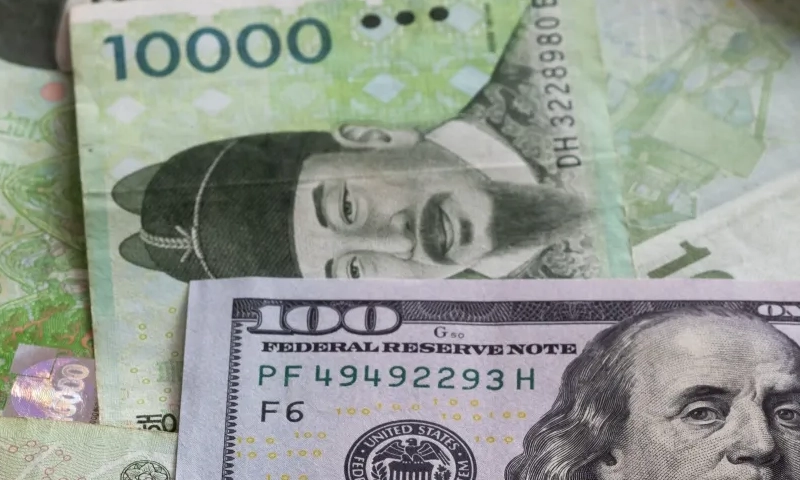
Seoul is holding trade talks with Washington and is seeking a waiver from the tariffs.
The remarks came as the tariff policies adopted by US President Donald Trump has jolted the world economy.
At the same time, the effects are not just limited to economy, with the US now pitted against its traditional allies too.
The views expressed by Lee are very important given that South Korea will head to the polls on June 3 to pick a new president. It is expected that he would emerge as a winner.
South Korea is holding a snap election to choose a successor to former President Yoon Suk Yeol who was impeached over his short-lived martial law declaration in December.
Sunday’s debate, the first of three TV debates scheduled over the next two weeks, focused on how to revitalise the struggling economy, one of the hot-button election issues.
Lee, the main opposition Democratic Party’s candidate and the frontrunner in the race, came under a flurry of questions in the heated, rapid-fire first debate.
CHINA FRIENDLY
The main opposition Democratic Party’s candidate and the frontrunner in the race, has faced criticism from opponents as being too friendly to China, citing his comments that South Korea does not need to get involved in China-Taiwan disputes.
But Lee, who considers pragmatism as key to his foreign policy, said the country “should not go all-in” on its alliance with Washington, and said managing China and Russia relations was important, although security cooperation with the US and Japan is necessary.
TRUMP TARIFF EFFECTS
Last week, the Asia-Pacific Economic Cooperation (APEC) grouping warned that exports from a region, which accounts for around half of world trade, would slow sharply this year and barely grow at all, in the wake of US tariff announcements.
The 21-member bloc had convened an annual session of trade representatives ahead of a leaders’ summit this year, with top US and Chinese trade envoys meeting on the sidelines following high-stakes talks earlier this month in Geneva, which sought to de-escalate a bitter trade war.
‘CALM’ AND ‘ORDERLY’
Earlier, South Korea had suggested “calm” and “orderly” discussions with the US on trade issues, when two sides began talks last month.
The South Korean finance minister had listed four categories to focus – tariff-and non-tariff measures, economic security, investment cooperation, and monetary policies.
It is July 8, when Trump’s tariff suspension is due to end. With Lee expected to win the presidential election, both Seoul and Washington are certainly waiting for the outcome on June 3.
Although, South Korea has also temporarily spared the “reciprocal” tariffs, the country still faces a 25 per cent levy on steel and aluminium imports to the United States. It is in addition to another 25 per cent on automobile imports, which are some of the country’s largest exports to the US.
It is worth noting that South Korea’s Hyundai and Kia are among the top eight-bestselling brands in the US.
You May Also Like