- Web Desk
- Jan 08, 2026
Iran: parliament exempts army, intelligence, nuclear agencies from MoFA oversight
-

- Hum News
- Nov 28, 2023
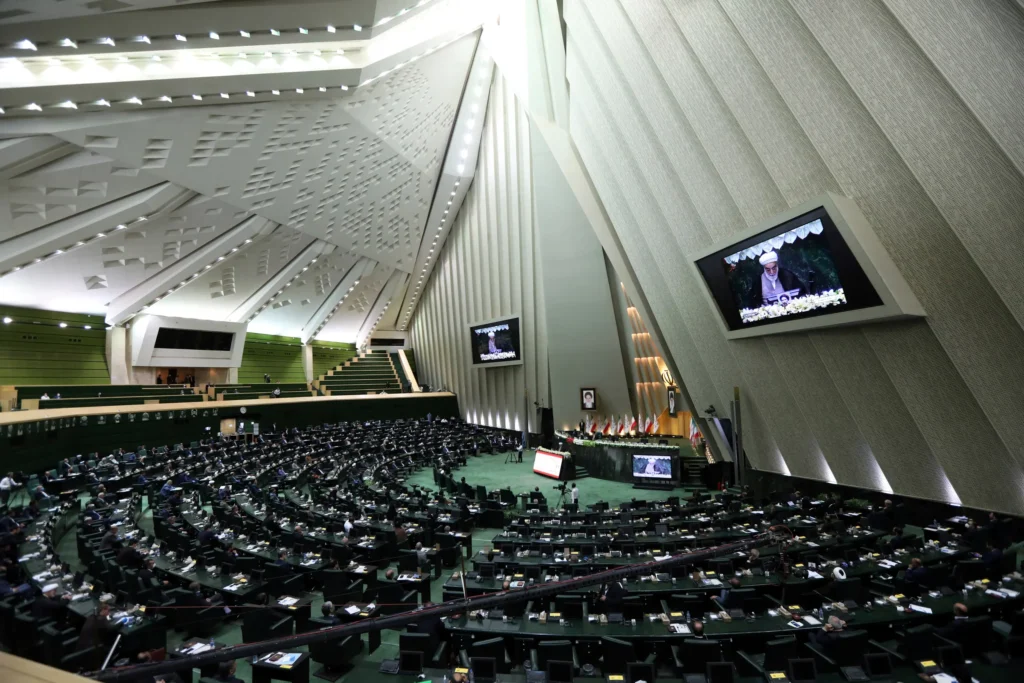
TEHRAN: The parliament of Iran has voted to exempt its armed forces, intelligence ministry, and the nuclear energy organization from coordinating their international engagements with the Ministry of Foreign Affairs (MoFA) according Iranian news agency Amwaj.
This decision, backed by the conservative-majority legislature, is seen by ‘reformists’ as an attempt to diminish the ministry’s influence. If enacted, this could signal a bolstering of the intelligence and security apparatus, particularly under conservative President Ebrahim Raisi, who assumed office in 2021.
According to Amwaj media, the legislative move occurred during a review of Iran’s 7th Five-Year Development Plan, which aims to guide budgets and development policies through 2028. Notably, this particular article, exempting key security and nuclear bodies from foreign ministry oversight, was added by lawmakers and was not in the original draft prepared by the Raisi administration.
The plan, though passed by the legislature, awaits approval from the Guardian Council to become law says the report.
Reformists, including former diplomat Kourosh Ahmadi, have voiced strong objections, asserting that such a law would encourage government bodies to operate independently, potentially causing chaos in Iran’s foreign policy. Pro-reform media outlets have echoed these concerns, highlighting the risk to Iran’s national interests if high-stakes foreign engagements are conducted without cohesive coordination.
Discrepancies worth millions emerge in Pakistan-Iran trade statistics
The proposal reflects a broader trend in Iranian politics, where the foreign ministry’s influence has been declining, particularly since the latter part of Hassan Rouhani’s presidency (2013-2021). This trend has accelerated under Raisi.
Notably, during Rouhani’s tenure, Mohammad Javad Zarif, a seasoned diplomat, was appointed foreign minister and played a key role in negotiating the 2015 Joint Comprehensive Plan of Action (JCPOA) with world powers. However, the foreign ministry’s status suffered setbacks, especially after the U.S. withdrawal from the JCPOA in 2018 and subsequent criticisms of Zarif’s approach.
Under Raisi, the foreign ministry’s role has continued to diminish, as evidenced by the limited influence of current Foreign Minister Hossein Amir-Abdollahian in major diplomatic engagements, including the nuclear talks and regional negotiations.
This shift aligns with a broader increase in power for Iran’s security services, as seen in recent legislative changes that expand the intelligence agencies’ influence over government appointments.
The potential marginalization of the MoFA in key policy areas in Iran highlights a shift in the dynamics of institutional politics in Iran. Critics argue that this could lead to a narrowing of perspectives in decision-making and unpredictable consequences for Iran’s future policymaking.
You May Also Like