- Web Desk
- Dec 25, 2025
KU seminar indicates food insecurity in Asian countries
-

- Web Desk Karachi
- Sep 07, 2024
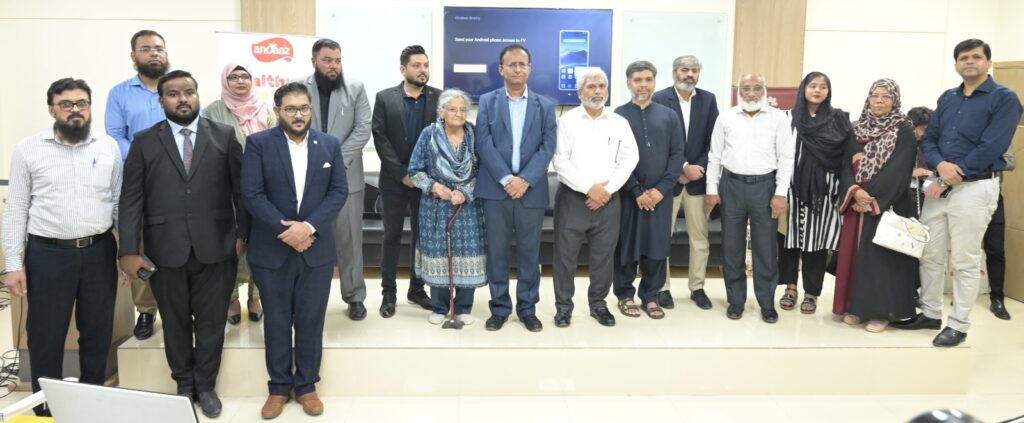
Food insecurity and malnutrition are serious global challenges and they are more serious issues in South Asian and African regions, the Registrar of the University of Karachi Professor Dr Abdul Waheed shared on Thursday.
He was addressing a seminar called Nutrivision-2024 feeding smart right from start, organized by the KU Department of Food Science and Technology at the FS&TD.
He mentioned that according to a Food Agricultural Organization report issued in 2023, South Asia is most affected by food insecurity and hunger as 1.4 billion (72.2 percent) people can’t afford two meals daily. 74.1 percent of Indians, 82.8 percent of Pakistanis, 76.4 percent of Nepalis, 66.1 percent of Bangladeshis, and 55.5 percent of Sri Lankans are facing the serious challenges of food insecurity.
He quoted that the Global Hunger Index in its 2023 report also reflects poor hunger conditions in the south Asian countries like Pakistan which ranked 102nd, India 111th, Bangladesh 81st, Nepal 69th, and Srilanka 60th out of 125 countries.
Dr Waheed expressed that food insecurity and malnutrition are daunting challenges for Pakistan. The Food Security Assessment Survey in 2016 also reflected that 18 percent population of Pakistan is undernourished.
Referring to UNICEF’s 2018 report, he said that around 37 percent population is facing food insecurity even though Pakistan is self-sufficient in essential staple foods. Pakistan is ranked 164 on the Human Development Index in 2022 among the 193 countries in combined indicators of health, education, and living standards.
He further said that Pakistan is frequently facing drop and famine, affecting household income and food security issues. This issue is largely observed in the provinces of Sindh and Balochistan. Sindh is the second largest province of Pakistan in terms of population and third in terms of area which is facing huge poverty, unemployment, income inequality, food insecurity, and lack of education and health facilities in the rural areas. Dr Abdul Waheed mentioned that the rural areas of Sindh face an acute shortage of water, particularly in the summer season.
“Generally there are 12 to 15 homes that have a single hand pump or water pumps. The lack of water facilities also affects their cleanliness and subsequently deteriorates the health of the family. During the discussion with health service providers, it was found that malnutrition is one of the basic problems in rural Sindh due to insufficient and imbalanced nourishment and poor hygienic conditions.”
He added that rural Sindh is severely affected by malnutrition and stunting issues. According to National Nutrition Survey in 2018 about 50 percent of children under five years of age are stunted and around 35 percent are severally stunted.
The Technical Nutrition Advisor and Public Health Nutrition Expert of the Sindh government Dr Naveed Bhutto mentioned that proper nutrition in the first 1000 days is the window of opportunity to tackle malnutrition. He also mentioned that breast cancer is increasing due to non-breastfeeding children.
He said that 40 out of 100 children are suffering from stunted growth. It is necessary to pay attention to the diet of the mother and the child. The first 1000 days are very important for the physical, cognitive, and social development of the child, who is often exposed to risks due to malnutrition.
He added that the first 1,000 days refers to the time from pregnancy through to when the child is two years old. During this time, a child’s brain’s capacity and structure are shaped at an exponential rate and 80 percent of the brain develops within the first 1000 days. Within this period, a child’s auditory and visual sensory systems, learning abilities, memory functions, and information processing systems are formed.
Dr Bhutto mentioned that poverty and malnutrition can often result in large ramifications for early brain development. Good nutrition for both the mother and child is necessary for optimal brain development. This includes receiving the proper daily caloric intake and critical micro and macronutrients. Calories are essential fuel for the growing organ, while key nutrients such as protein, iron, and various vitamins, support particular neurodevelopment processes within the brain. This requires access to sufficient, safe, nutritious, and quality foods. Without access to these resources, malnutrition, or poor nutrition, occurs.
He added that malnutrition is a result of a deficiency in food or a lack of a proper diet. The body becomes depleted of energy and crucial nutrients it needs to function. As a result, deficits and gaps in brain development occur. At a time when a child’s basic neural systems and functions are not fully developed, nutrient deficiencies can result in both immediate and long-term consequences for a child.
Dr Naveed Bhutto said that malnutrition is a major public health problem in Pakistan, especially among women of productive age and children under five years of age. According to a survey, 34 percent of women of productive age and children under five years of age face iron deficiency in 49 percent of children, 27 percent of women of productive age, and 51.5 percent of children under five years of age had vitamin A deficiency.
Another speaker, a child specialist Dr Azhar Chughtai said that 50 percent of mothers or women are suffering from anemia and mentioned that iron deficiency can be easily corrected. There are more than 15 medical colleges in Sindh alone, but good doctors are not available.
The founder chairperson of the KU FS&TD Dr Rashida Ali said that the reason for most diseases in Pakistan is lack of nutritional information and the most common diseases in Pakistan including diabetes, high blood pressure, and heart diseases are also related to diet. The origin of diseases is weight issues and caused due to lack of energy balance.
Earlier, the KU Chairman FS&TD Dr Abdul Haq, faculty member Dr Syed Muhammad Ghafran Saeed, Dr Zubala Lutfi, executive director M. M. Ghee Mill (Pvt) Limited Haseeb Khan, and other industrialists also spoke on this occasion.
You May Also Like