- Web Desk
- Jan 08, 2026
Women in former FATA bear the brunt of climate change
-

- Web Desk
- Oct 02, 2023
By Imad Abbas
PESHAWAR: Climate change is no longer a novel concept; its impacts have grown significantly more severe over the past three or four decades. While climate change is a global issue, it has disproportionately affected specific sectors and segments of society.
Among the most vulnerable are women, who find themselves particularly susceptible and exposed to climate change and its consequences. According to the 2014 UN Women’s Report, “Climate change is a global challenge that has affected many lives and livelihoods; however, women and children are arguably the most affected.”
Additionally, Oxfam research confirms that “women constitute a very vulnerable population group, particularly those in less economically developed countries who suffer from delayed economic development and generally live in poverty.”
As a result, the ramifications of shifting weather patterns are not limited to any particular ethnic group or societal segment; rather, they have far-reaching consequences. Given that women are often the most marginalized in the least developed regions, they bear the brunt of these effects.
Despite ample literature addressing the climate-induced challenges faced by women in various provinces, the women of the formerly Federally Administered Tribal Areas (FATA), now integrated into Khyber Pakhtunkhwa, remain largely overlooked. Their struggles remain largely absent from media coverage and reports.
Traditionally, women’s entitlement is closely tied to the resources at their disposal, and climate change has made the women of formerly FATA exceptionally vulnerable and exposed to various problems. The changing climatic conditions have exposed them to increased droughts due to the overexploitation of water reserves.
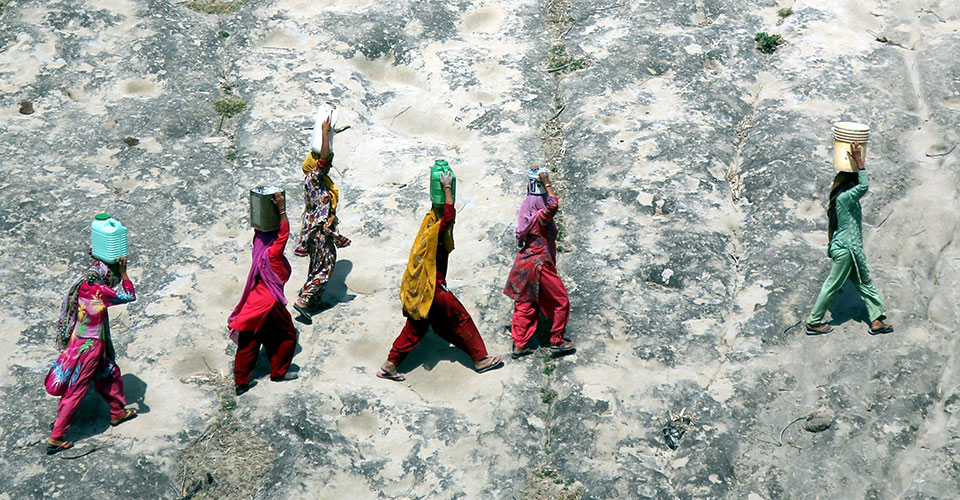
Traditionally, women in every household are responsible for fetching water from tube-wells or hand-pumps. With groundwater levels plummeting, women have to travel considerable distances daily to obtain water, often leading to exposure to harassment and violence.
Furthermore, as women shoulder the daily household chores, they are responsible for water collection, causing many young girls to compromise on their education or drop out of school to assist their mothers, increasing their dependence on men.
Climate change has also exacerbated health risks, particularly reproductive health, among women in formerly FATA. Environmental factors have contributed to early menarche, medically known as precocious puberty, which can lead to more extended menstruation periods and an increased likelihood of pregnancies, often resulting in early child marriages.
These early marriages lead to more significant financial burdens on families. Additionally, food scarcity, linked to the barren lands of formerly FATA, impacts women’s nutrition levels, leading to premature deliveries and miscarriages.
The lack of adequate healthcare facilities for women in formerly FATA further complicates their situation. In summary, changing climate conditions have dire consequences for the women of formerly FATA, who are still searching for advocates to raise their concerns with officials and implement measures to mitigate the associated risks.
In the absence of prompt and efficient measures, coupled with the high childbirth rates and female mortality in the KP province, along with insufficient public health infrastructure, the impact of climate change further exacerbates their plight.
Prioritizing women in policymaking is crucial to empower them and align Pakistan with the United Nations Sustainable Development Goal 5, which focuses on gender equality and climate action. Active engagement of local stakeholders, especially those most vulnerable to climate change, is essential for informed decision-making and governance in response to climate change across sectors.
Given that women’s vulnerability to climate change differs significantly from that of men, addressing these challenges requires a gender-based response. Will the directly affected people of climate change, especially the women of formerly FATA, be consulted when formulating related policies? Without a gender-based approach, any success in mitigating climate change impacts remains a distant goal.
You May Also Like