- Web Desk
- Jan 08, 2026
Why did the Afghan Taliban sour on Pakistan?
-

- DW
- Apr 21, 2024
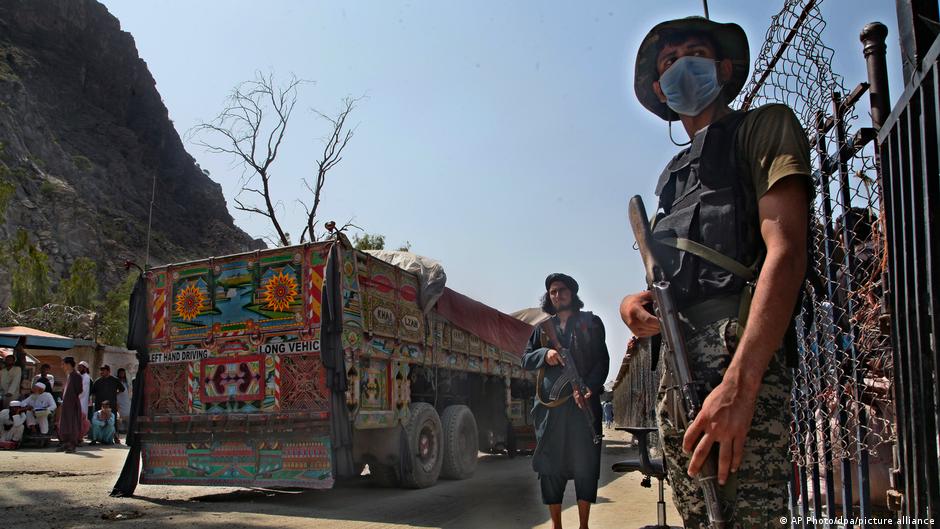
KABUL: The relationship between the Afghan Taliban and Pakistan’s government has been growing more and more strained since the fall of Kabul in August 2021.
Many experts attribute the current tensions to the increase in cross-border terrorism originating from Afghanistan.
Read more: Taliban accuses US of violating Afghan airspace
But some of Islamabad’s recent actions have also embittered the Taliban regime — last year, Pakistan enforced trade restrictions on its neighbouring country, expelled 500,000 undocumented Afghan migrants, and implemented stricter visa policies at border crossings.
Last month, Pakistan launched rare airstrikes inside Afghanistan, targeting the suspected hideouts of militant groups, killing eight people, and prompting Afghan forces to return fire on the border.
From hope to friction
Pakistan had initially hoped to capitalise on its history of cooperation with the Taliban after their takeover, Naad-e-Ali Sulehria, a South Asia Fellow at the PoliTact think tank in Washington, told DW.
Specifically, according to the analyst, Islamabad expected the Afghan Taliban to move against the Tehreek-e-Taliban Pakistan (TTP) and other militant groups, and “disrupt their sanctuaries on Afghan soil.”
But those hopes evaporated within the first 12 months of Taliban rule in Kabul.
Instead, Pakistan experienced a surge in terrorism as the Taliban return to power emboldened and empowered the TTP.
A report by the Islamabad-based Center for Research and Security Studies reveals a 56 per cent increase in fatalities from militant attacks in 2023 compared to 2022, with more than 1,500 deaths, including those of 500 security personnel.
Just this week, two police officers were killed and six injured in two separate attacks in two volatile districts of Khyber Pakhtunkhwa province.
Why has Pakistan backed the Taliban?
Pakistan’s relationship with the Taliban has long been complex and often contradictory, with shifts motivated by historical events and strategic calculations.
The two countries have cultural ties, but have been at loggerheads over the Durand Line, the 2,640-kilometer border drawn up by the British in 1893.
The line divided Pashtun tribal lands, eventually fueling the concept of “Pashtunistan,” an independent state incorporating Pashtun areas on both sides of the border. While the state never came to pass, the dispute continues to simmer to this day.
On the other hand, the Soviet invasion of Afghanistan in 1979 saw Islamabad forge close ties with a few factions across the border.
“Fearing Soviet influence, Pakistan became a key conduit for Western aid to the Afghan Mujahideen, a collection of rebel groups fighting against the Soviets,” said Ubaidullah Khilji, an Afghan history researcher currently based in Islamabad.
Read more Olympian urges IOC to ban Afghanistan due to Taliban’s treatment
After the Soviet withdrawal, Afghanistan become embroiled in a civil war that ushered in a new faction — the Taliban. Pakistan, along with Saudi Arabia and the United Arab Emirates, recognised the Taliban regime in 1996, providing it with significant military support and resources.
That regime collapsed in late 2001, after the US and its allies occupied Afghanistan in the wake of the 9/11 attacks on the US.
You May Also Like