- Web Desk
- Jan 08, 2026
Iranian envoy wants Tehran to withdraw Quetta’s CG over visas remarks
-

- Tahir Khan
- Jul 31, 2025
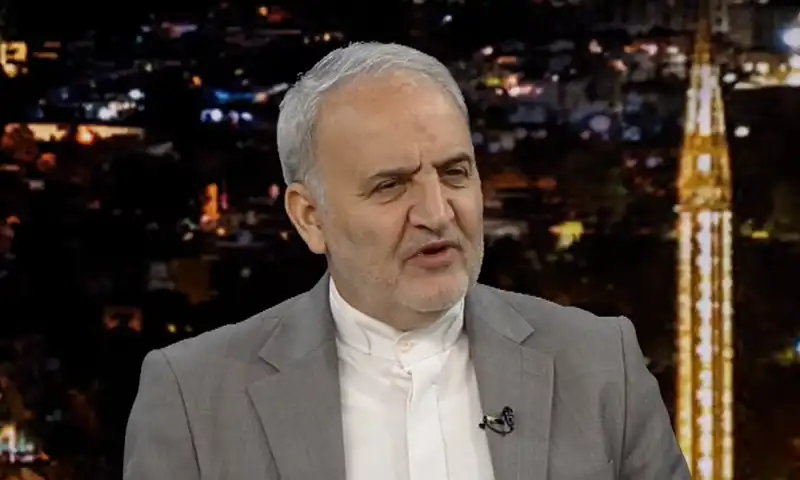
ISLAMABAD: Iranian ambassador to Pakistan Reza Amiri Moghadam has suggested to his government to immediately withdraw the country’s acting Consul General in Quetta Ali Raza Rajai for his remarks about issuance of visas to Pakistani pilgrims.
On July 27, Pakistan’s Interior Minister Mohsin Naqvi declared that the government will not allow pilgrims to travel via Balochistan, to go to Iran and Iraq by road for the ‘Arbaeen’ pilgrimage this year in view of security concerns.
But the Iranian Consul General in Quetta said in a video that his consulate will issue visas to pilgrims if anyone reaches the Taftan border crossing with Iran. The video in Persian and translation is available with Hum News English.
Pezeshkian to sign trade agreements during Pakistan visit
“There is a lot of pressure on us about the visas of the pilgrims. Pilgrims say that the Iranian consulate in Quetta does not issue visas to pilgrims. We have no problem giving visas to those pilgrims who can reach Taftan border,” the Iranian Consul General said in the video.
Five Iranian police killed in ambush in Sistan-Baluchistan
“Their visas would be issued on the Taftan border. Those who can reach the border, they should share names and all details with the consulate. We request the Deputy Commissioner, the security forces and police to help us,” Rajai added.
In some social media posts, the Consul General’s remarks were attributed to the ambassador.
A diplomatic source told Hum News English that the embassy would not issue to those who planned to go by road after the Pakistani decision. However, there is no issue for those who would go by air, he said.
Iranian embassy’s statement
The embassy “denied and considered inaccurate” what it called the circulation of false information attributed to the ambassador on certain personal social media pages, regarding visa issuance procedures or individuals’ in-person visits to border crossings.
It said the Embassy of the Islamic Republic of Iran has issued no statement or taken any official position following the announcement of the government of Pakistan that this year Zaireen will not be allowed to travel to Iraq and Iran by road for Arbaeen.
The embassy said that the statement was the result of a tripartite coordination meeting held in Tehran with the esteemed governments of the Islamic Republic of Pakistan and the Republic of Iraq.
Honour killing: man kills wife, another man in Gilgit-Baltistan
On July 14, the Pakistani, Iranian and Iraqi interior ministers in a meeting in Tehran had agreed to establish a joint working group to streamline travel arrangements for pilgrims
The only authorized and competent source for official comments on this matter is the Ambassador of the Islamic Republic of Iran to Pakistan. Any necessary statements are published solely through the official communication platforms and the Press Section of the Embassy of the Islamic Republic of Iran in Islamabad.
What does the Interior Minister say?
Naqvi wrote on X on July 27 “After extensive consultations with the Ministry of Foreign Affairs, Balochistan Government, and security agencies, it has been decided that Zaireen will not be allowed to travel to Iraq and Iran by road for Arbaeen this year. This difficult decision was taken in the interest of public safety and national security. Zaireen will, however, be able to travel by air. Prime Minister Mian Muhammad Shehbaz Sharif has directed authorities to arrange maximum flights to facilitate their pilgrimage in the coming days.”
After extensive consultations with the Ministry of Foreign Affairs, Balochistan Government, and security agencies, it has been decided that Zaireen will not be allowed to travel to Iraq and Iran by road for Arbaeen this year. This difficult decision was taken in the interest of…
— Mohsin Naqvi (@MohsinnaqviC42) July 27, 2025
A large number of Pakistani citizens visit Iran and Iraq every year for religious tourism and to visit religious sites, including observing Arbaeen. It marks the end of a 40-day mourning period for Hazrat Imam Hussain (AS), who was “martyred” along with family members and companions in the Battle of Karbala in 680 AD.
Baloch separatist now routinely target buses on main highways in Balochistan, which shares a border with Iran.
Shehbaz says practical strategy followed to root out terrorism
You May Also Like