- Web Desk
- Jan 08, 2026
Govt notifies closure of Afghan refugee camps in Balochistan
-

- Web Desk
- Sep 28, 2025
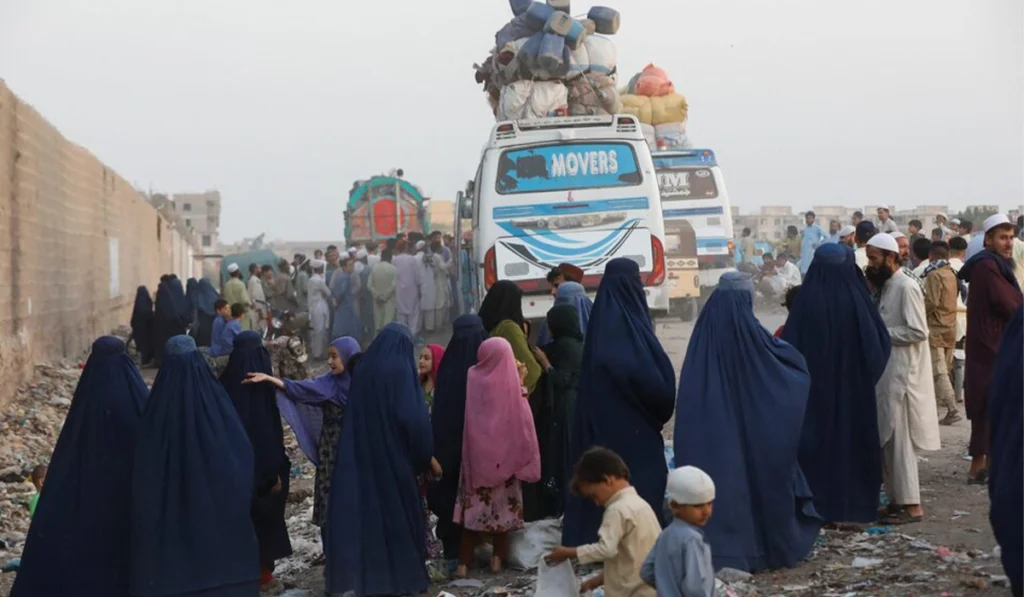
ISLAMABAD: In a significant move amid ongoing efforts to repatriate Afghan refugees, the federal government has issued a notification directing the closure of Afghan refugee camps in Balochistan.
The move came Pakistan decided to shut down 16 Afghan refugee camps in Khyber Pakhtunkhwa, Balochistan, and Punjab with similar notifications issued in the case of other provinces.
Last month, the federal government informed the provinces last month that the formal repatriation and deportation of over 1.3 million Afghan refugees holding Proof of Registration (PoR) cards will begin on September 1.
The decision, part of a broader policy to phase out refugee settlements, will see the camps, their land, and assets transferred to the provincial government.
Earlier, China, Iran, Pakistan and Russia on the sidelines of the United Nations General Assembly in New York “urged Afghan authorities to create conditions that facilitate the return of Afghan refugees to their homeland, prevent further migration, and take serious measures to ensure returnees livelihoods and reintegration into political and social processes to achieve a lasting solution”.
Read more: Pakistan warns of terrorist threat emanating from Afghanistan
ASSETS FOR LOCALS
According to the notification, the camps located in five districts — Chaghi, Qilla Abdullah, Pishin, Qilla Saifullah and Loralai — will be shut down.
These sites have housed hundreds of thousands of Afghan refugees for decades since 1980s.
As far as the future use if concerned, the handover process aims to ensure that the assets are repurposed for local communities, with deputy commissioners in the respective districts tasked with overseeing the transition and guaranteeing that camp resources benefit the indigenous population.
“The deputy commissioners of the concerned districts will ensure the utilization of camp assets for the local population,” the notification states, emphasizing a focus on community safety and productive use of non-movable assets such as buildings and infrastructure.
The move reflects the government’s push to repatriate over 850,000 Afghan refugees who have returned home in recent years.
RISING TERRORISM
Government officials have cited security concerns and the need for legal documentation as key drivers behind the policy. They have linked undocumented Afghan refugees to rising terrorism in Balochistan and Khyber Pakhtunkhwa.
Read more: Terrorist outfits producing instability, joint action needed: Pakistan
It is in this context that China, Iran, Pakistan and Russia also “expressed deep concern over the security situation related to terrorism in Afghanistan, noting that terrorist groups such as ISIL, Al-Qaeda, the Eastern Turkestan Islamic Movement (ETIM), Tehrik-i-Taliban Pakistan (TTP), Jaish ul-Adl, Balochistan Liberation Army (BLA) and other similar groups in the region including Majeed Brigade, as well as others, based in Afghanistan, continue to pose a serious threat to regional and global security”.
You May Also Like