
- Web Desk
- Jan 08, 2026
Chenab and Sutlej continue inundating Punjab
-

- Web Desk
- Sep 05, 2025
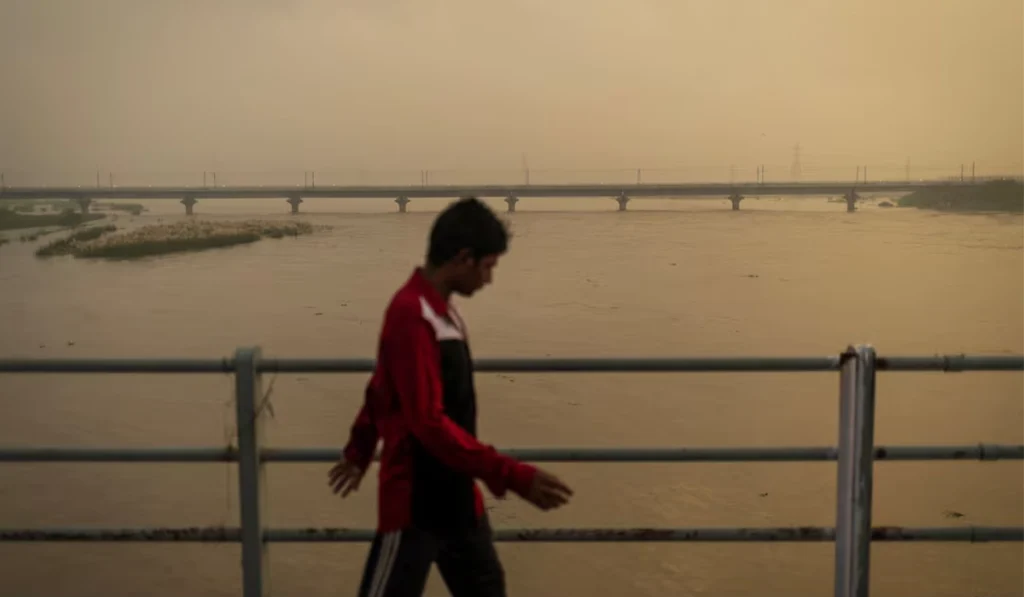
ISLAMABAD/LAHORE: Sutlej was in exceptionally flood at Ganda Singh Wala in Kasur on Thursday, threatening the areas in its downstream, while the raging waters of Chenab also continued inundating large swaths of land in the fertile plains of Punjab.
Meanwhile, India on Thursday warned Pakistan of another flood surge after it released more water from reservoirs — dams at Pong and Bhakra — amid torrential rain had swollen many rivers.
And to make the things worse, another monsoon system is set to hit the flood-hit eastern and northeastern Punjab as well as Sindh from September 6.
Read more: Monsoon low from India to hit eastern Punjab, Sindh
With around 330,000 cusecs of waterflow passing through Harike in Sutlej, the river is expected to remain in exceptionally high flood Ganda Singh Wala in the coming days, which would further worsen the already deteriorating situation in downstream areas.
At least 49 deaths have so far been reported in Punjab, according to official figures. The number of affected villages is over 4,000, affecting a population of 3.8 million.
In this scenario, more and more people were being forced to leave their homes as overflowing rivers flooded farmlands, destroying standing crops and also endangering the cattle.
DYKES SWEPT AWAY
With the water level in Chenab rising again downstream of Khanki at Qadirabad, Chiniot and Trimmu, breach in a protective levee near Qasim Bella, located around 13 kilometres east of Multan, resulted in villages and settlements being flooded.
Read more: Dykes breached to protect populated areas as flood ravages Punjab
Around 21 kilometres southwest of Multan, the Chenab River swept away another dyke near Sher Shah, which might also suspend or at least traffic on the highway connecting Multan with Muzaffargarh, Dera Ghazi Khan and other parts of southern Punjab.
On the other hand, the rising water at Panjnad was also increasing pressure on dykes. As a result, one of these was breached on Thursday at Basti Makhan Bella in Muzaffargarh district.
Similar, the alarmingly high and persistent waterflow in Sutlej is damaging the dykes along the river. That’s why the floodwaters swept away several levees in Kahror Pakka — a tehsil in Vehari district — as well as Bahawalnagar.
This development along the overflowing rivers is in addition to the breaches made by the authorities in a planned manner to protect the populated areas.
FLOOD LEVEL
The latest Flood Forecasting Division (FFD) data at 3pm showed that Sutlej was exceptionally high flood at Ganda Singh Wala a flow of 327,030 cusecs, in high flood at Sulemanki 139,578 cusecs and in medium flood 102,045 cusecs at Islam Headworks.
However, there has been some negligible decrease in waterflow Sutlej with the latest reading of 319,295 cusecs at 9pm.
Meanwhile, exceptionally high flood was still being witnessed in Ravi at Sidhnai with a flow of 135,053 cusecs.
In the north of Sidhnai, Ravi was in high flood with a flow of 134,360 cusecs and 100,850 cusecs at Balloki and Shahdara respectively.
By 9pm, the river flow at Sidhnai had dipped a bit to 130,164 cusecs. However, the flow at Balloki jumped to 138,760 cusecs into the very high flood range.
The reading in the case of Shahdara was also up, reaching 108,960 cusecs.
Meanwhile, the corresponding figures for Jassar were 80,220 cusecs against 84,060 cusecs at 3pm.
But things were much worse and threatening for more population when it comes of Chenab — the second largest river of Pakistan.
Very high flood was recorded at Qadirabad and Chiniot — 507,401 cusecs and 525,594 cusecs respectively at 3pm.
But by 9pm, a very high flood of 554,998 cusecs was passing through Chiniot, with a massive drop at Qadirabad where the waterflow had declined to 385,228 cusecs.
Meanwhile, the flood situation in all the rivers remained more or more the same in the 11pm update.
On the other hand, 506mm of rain a day earlier meant that life remained paralysed in Gujrat on Thursday too, with around five feet of water accumulated in several areas.
This massive urban flooding is produced by not only insufficient drainage system but also the nullahs like Phulko that passes near the city.
CLIMATE CHANGE
Meanwhile, South Asia, unfortunately, offers a case study on the devastating effects of global warming. On one hand, northwest India is witnessing vigorous monsoon activity that also extended into Pakistan this season, the northeastern state of Assam has been experiencing a consistent decline in rains.
The end result is reduced production of tea, which will push the global prices upwards.
Read more: Assam is getting drier, threatening India tea exports
At the same time, it shows how climate change is harming agriculture and people’s livelihoods, requiring a coordinated global action.
Read more: Climate change batters agriculture. Hungary is an example
You May Also Like