- Web Desk
- Jan 08, 2026
SC issues detailed verdict nullifying amendments to NAB laws
-

- Web Desk
- Sep 15, 2023
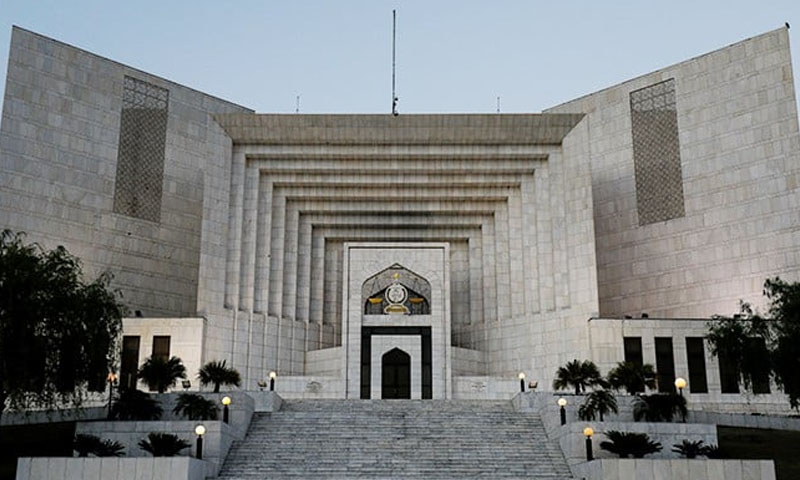
ISLAMABAD: The Supreme Court has issued a detailed 2:1 majority verdict, nullifying amendments made to NAB laws, which also includes Justice Mansoor Ali Shah’s dissenting note.
The Supreme Court began the detailed verdict by referencing Surah Anfal’s verse. In the majority written verdict, it has been stated that former Chief Executive Gen Pervez Musharraf introduced the NAB law, and retrospectively implemented it from January 1, 1985.
The amendments made to NAB laws in 2022 had repercussions on the references in accountability courts, the verdict said.
The decision mentions that in the year 2022, after amendments to the NAB law, 386 references were withdrawn, and in 2023, after the amendments, 212 NAB references were withdrawn.
To date, it said a total of 598 references have been withdrawn due to the amendments to the NAB laws.
According to the Supreme Court’s verdict, out of the references withdrawn due to the amendments, 35 references pertain to politicians, while the references withdrawn after the amendments in 2023 involve a public amount of Rs150 billion.
In 2022, the verdict said, 327 NAB references were sent back to the accountability courts due to setting a limit of Rs5 billion.
The decision further reveals that out of the 598 references as per NAB data, only 54 references were sent to other courts, while 13 references were sent to the Custom Courts, and four cases were transferred to Banking Courts.
Justice Mansoor Ali Shah’s dissenting note
Justice Mansoor Ali Shah stated in his dissenting note that he read the majority decision last night, with which he does not agree. Due to time constraints, he said he will release the detailed reasons for his dissenting note later.
He emphasised that the fundamental question is not about amendments to NAB laws but about the elected parliament of 240 million people.
Petition against NAB amendment admissible for hearing, says SC
Justice Shah wrote that the fundamental question relates to the division of powers in a parliamentary democracy, and the majority decision failed to understand that the powers of the parliament, as enshrined in the constitution, are not subject to any limitation.
“The majority decision incorrectly equates the distribution of powers in the constitution without understanding the fundamentals of the republican system. The case did not concern illegal amendments but the parliament’s supreme authority. In light of these reasons, I reject the majority decision while disagreeing.”
Earlier, the reserved verdict was announced by a three-member bench, consisting Chief Justice of Pakistan (CJP) Umar Ata Bandial, Justice Ijazul Ahsan, and Justice Syed Mansoor Ali Shah, on a petition of the PTI chairman, who had challenged the modifications introduced to the NAB laws.
You May Also Like