- Web Desk
- Jan 08, 2026
Report calls for inclusive education in KP
-

- Web Desk
- Mar 27, 2024
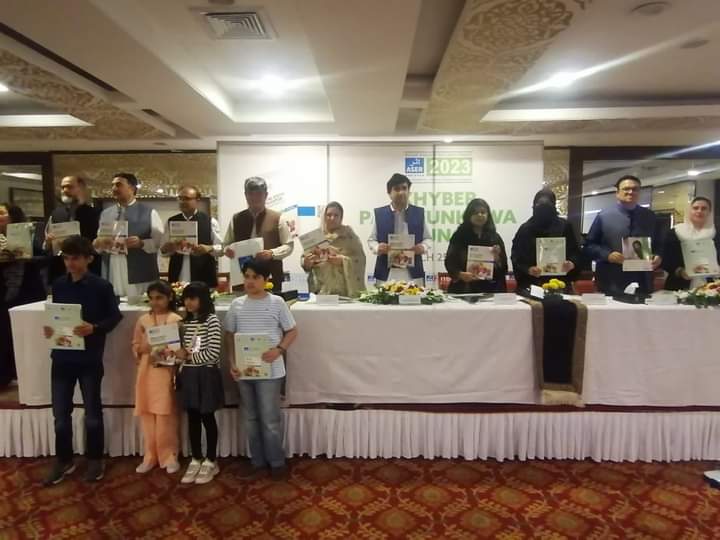
PESHAWAR: The ASER Pakistan Provincial Report 2023 was unveiled on Wednesday in Peshawar, offering a comprehensive analysis of the educational landscape in Khyber Pakhtunkhwa (KP).
The report underscores the urgency of fostering inclusive education, particularly for children with disabilities, girls, and marginalized communities. The event was graced by KP Education Minister Faisal Khan Tarakai as the chief guest.
The launch saw a diverse group of stakeholders, including government officials, civil society members, and development partners. ASER Pakistan, spearheaded by Idara-e-Taleem-o-Aagahi (ITA), endeavours to provide accurate data on children’s learning levels, in line with educational objectives and Article 25-A of the constitution.
The 2023 survey encompassed 41,373 children aged 5-16, evaluating their foundational skills in Urdu, Arithmetic, and English across 962 villages in 34 rural districts of KP. The assessment included 1,478 schools and 20,357 households, presenting a detailed portrait of the region’s educational climate.
Key findings reveal a notable rise in enrollment rates for Early Childhood Education (ECE) and children aged 6-16, with current figures at 39% for ECE (up from 30% in 2021) and 90% for the 6-16 age group (a leap from 73% in 2021). This increase signifies the collective efforts to broaden educational access, establishing a robust groundwork for future academic pursuits.
Read more: Tablets distributed for educational advancement in Punjab schools
Despite a shift towards private schooling, with an increase from 14% in 2019 to 24% in 2023, government schools remain the backbone for the majority (76%) of students aged 6-16. This trend calls for strategic measures to guarantee equal access to high-quality education in both public and private institutions.
However, the report also highlights a decline in learning outcomes since 2021, with only 44% of children able to read an Urdu story, 48% fluent in English sentence reading, and 49% capable of solving two-digit arithmetic divisions. These figures underscore the need for district-level initiatives to elevate learning standards, particularly as the region recovers from the pandemic’s impact.
At the grade 3 level, the learning crisis is evident, with only 17% of children able to read an Urdu story, 20% fluent in English sentences, and a mere 14% proficient in two-digit arithmetic divisions, aligned with the grade 2 curriculum. This educational challenge persists into higher grades, indicating a broader issue with learning outcomes.
The report also sheds light on gender disparities, with boys outperforming girls in all assessed areas. Nonetheless, the enrollment of both genders has increased since 2019, and the percentage of out-of-school children has significantly declined, signaling progress in educational accessibility.
In conclusion, while there are positive developments in enrollment and gender parity, the ASER 2023 report calls attention to the learning deficit and the importance of technological access in education, urging for targeted interventions to address these critical areas.
You May Also Like