- Web Desk
- 10 Hours ago
Quake of 2011 in Japan: Tokyo’s day of tremor and flood
-

- Sadiq Khan
- Dec 08, 2025
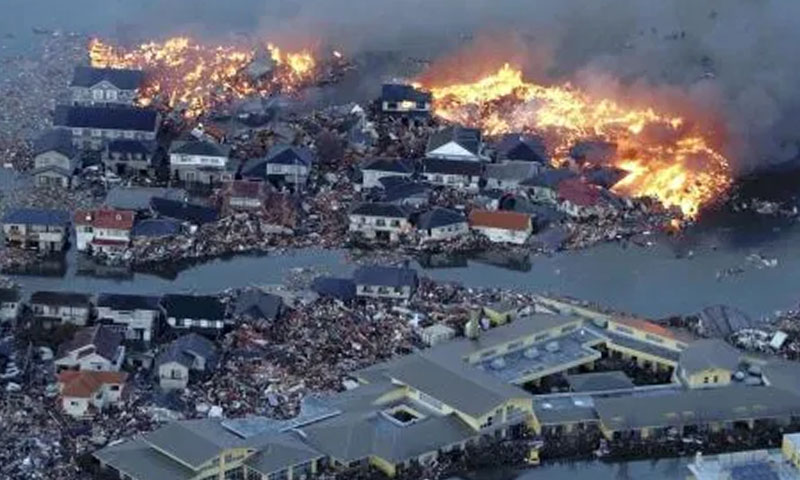
TOKYO: It was the afternoon of March 11, 2011, when people in northeastern Japan went about their day as usual. Shops opened, children returned from school, and fishermen checked their boats along the coast. Then, at exactly 14:46, the ground began to shake.
The earthquake was unlike anything Japan had ever experienced. Measuring 9.0 on the Richter scale, it lasted six minutes. Buildings swayed, roads cracked, and terrified people ran outside. The quake itself caused enormous damage, but the worst was still to come.
Far offshore, the movement of the ocean floor pushed a wall of water toward the coast. The tsunami arrived in minutes. In some towns, waves rose as high as 40 metres, racing 10 kilometres inland. Entire villages were swallowed. Roads, bridges, and homes were swept away. Ports and fishing boats were destroyed.
By the end of the disaster, around 18,500 people had died or were reported missing. Nearly 90 percent drowned in the rushing waters. Hundreds of thousands lost their homes and were forced into shelters. The economic cost exceeded $230 billion, making it one of the most expensive natural disasters in modern history.
The flooding also caused a nuclear crisis at the Fukushima Daiichi plant. Power and cooling systems failed. Three reactors melted, forcing the evacuation of over 150,000 people. Radiation contamination added long-term fear and disruption to the disaster’s impact.
The earthquake shifted Japan’s land. Parts of Honshu moved up to 2.4 metres eastward, and some coastal towns sank by more than a metre. Even the Earth’s rotation changed slightly, shortening the day by a tiny fraction of a second.
Despite the destruction, communities responded with courage. Neighbours rescued each other. Volunteers arrived from across Japan and the world. Slowly, towns were rebuilt. Roads were repaired. Homes were restored. Life returned, even after such immense loss.
The 2011 tsunami remains a stark reminder of nature’s power. It shows how quickly the world can change, how fragile human life can be, and how resilience and preparedness can save lives in the face of overwhelming force.
You May Also Like