- Aasiya Niaz
- Today
The only good terrorist is a dead terrorist: DG ISPR
-

- Web Desk
- Jan 06, 2026
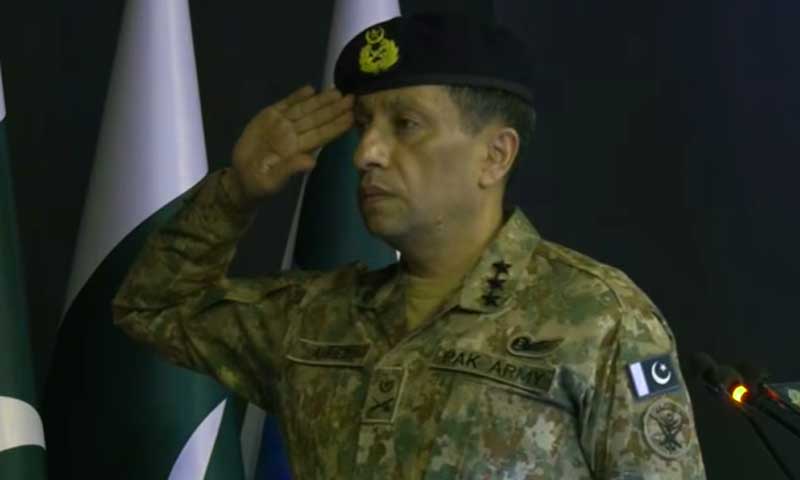
WEB DESK: Addressing the media, Director General of the Inter-Services Public Relations (ISPR) is Lieutenant General Ahmed Sharif Chaudhry briefed about the various intelligence based operations (IBOs), carried on to eradicate terrorism from Pakistan.
Inter-Services Public Relations (ISPR) Director General Lieutenant General Ahmed Sharif Chaudhry on Tuesday said Pakistan remained fully committed to eliminating terrorism, stressing that the fight against militancy was a collective struggle involving the state, security forces and the public. Addressing a press conference, he paid tribute to the martyrs from the armed forces, police, Frontier Corps and other law enforcement agencies, saying the nation must honour their sacrifices. He emphasised that security forces were conducting round-the-clock operations and that terrorism continued to pose the gravest threat to Pakistan.
Paying tribute to martyrs from the armed forces, police, Frontier Corps and other law enforcement agencies, he said the nation must honour their sacrifices. He added that security forces were conducting round-the-clock operations and that terrorism continued to pose the gravest threat to the country.
India, Afghanistan blamed for terrorism
The DG ISPR said Pakistan had been battling terrorism for more than two decades and described India as the “largest pattern” behind terrorism in the country. He reiterated that militant groups labelled as Fitna-al-Khawarij had no connection with Islam, while Fitna-al-Hindustan had no link to Pakistan or the Baloch people. He added that Afghanistan had become a hub for terrorist activity and said Pakistan’s concerns were grounded in realities on the ground.
Unprecedented counterterrorism operations in 2025
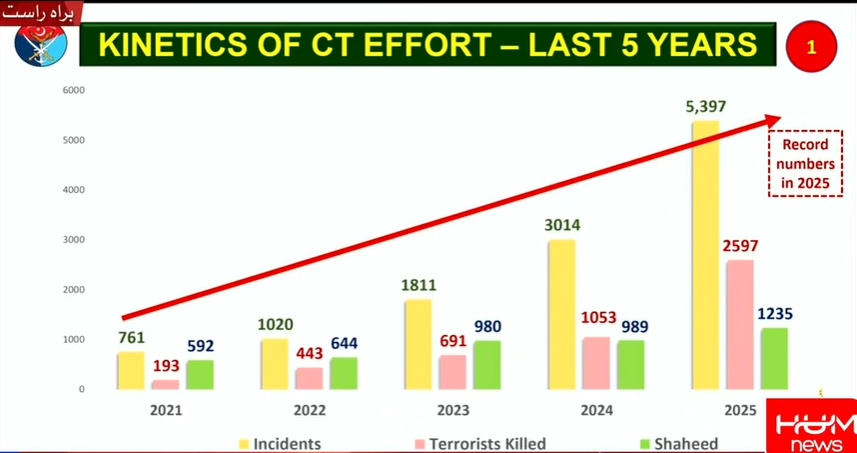
Providing operational data, Lt Gen Chaudhry said 2025 witnessed an unprecedented scale of counterterrorism activity, with 75,175 intelligence-based operations conducted nationwide. During the year, 5,400 terrorist incidents were recorded, compared to 761 incidents in 2021. Security forces killed 2,597 terrorists in 2025, including 1,803 in Khyber Pakhtunkhwa and 784 in Balochistan. He said Khyber Pakhtunkhwa remained the most affected province, where terrorism enjoyed political patronage and a criminal–terror nexus had taken root.
Spike in suicide attacks, Afghan involvement highlighted
Lt Gen Chaudhry said a total of 27 suicide attacks took place across the country in 2025, including 16 in Khyber Pakhtunkhwa, 10 in Balochistan and one in Islamabad. He added that two of the attackers were women and said Afghan nationals were involved in suicide attacks. Terrorism in Pakistan, he said, was being orchestrated from Afghan soil in violation of commitments made under the Doha Agreement.
Terror groups operating from Afghan soil
He said Pakistan had repeatedly urged Afghanistan to prevent the use of its territory for terrorism but warned that there was effectively no functioning governance structure there. He said terrorist groups including the TTP, Al-Qaeda, Daesh and the BLA were present in Afghanistan, while advanced weapons left behind by US forces — valued at $7.2 billion — had strengthened militant capabilities through black markets. He added that India was using Afghanistan as a proxy and providing funding, drones and logistical support to terrorists.
Major attacks and swift military responses
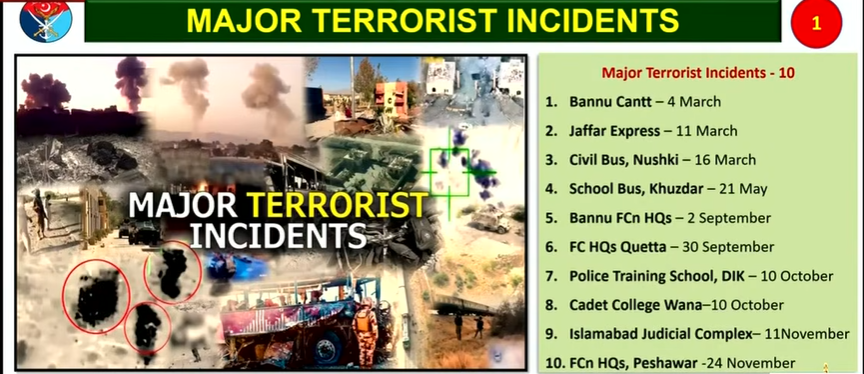
Referring to major incidents, the DG ISPR said the Jaffar Express attack and the attempted assault on Wana Cadet College highlighted the persistent threat posed by militants. He said all terrorists involved in the Wana attack were neutralised, though four soldiers were martyred. He added that terrorists had remained in contact with facilitators outside Pakistan and that their hideouts in Afghanistan were destroyed within hours.
War on terror not the military’s fight alone
Rejecting claims that the war on terror was only the military’s fight, Lt Gen Chaudhry said there was no divide between the state, armed forces and the public. He said the Pakistan Army targeted only terrorists and avoided collateral damage, stressing that counterterrorism was primarily an intelligence-driven campaign. He added that Pakistan’s counterterrorism narrative had gained international recognition.
Disinformation networks and Indian media narrative
The DG ISPR said the military had uncovered a coordinated disinformation network operating on social media and accused Indian media outlets of amplifying misleading content. He said the same videos circulated by Indian platforms would be used to counter false narratives. He added that terrorism was often carried out under the guise of democracy or human rights and said the issue of militancy originating from Afghanistan was now being openly discussed worldwide.
Global acknowledgment of terrorism from Afghanistan
Lt Gen Chaudhry said several countries, including Australia, Germany, Russia and other European states, had described Afghanistan as a hub of terrorism, adding that Iran had also acknowledged this. He criticised the Khyber Pakhtunkhwa government for denying that terrorism was emanating from Afghanistan and said Pakistan’s position — shared by the international community — was clear that terrorist activity was being directed from across the border.
False narratives and political cover for militants
Rejecting claims that military operations were being conducted for financial gain, the DG ISPR said such narratives were false and misleading, adding that funding was instead flowing to terrorist groups. He accused some domestic actors of spreading disinformation and said illegal mining activities were taking place in Khyber Pakhtunkhwa. He stressed that the army acted strictly in accordance with federal government directives and that it was unacceptable to allow regions to fall into militant control for political reasons.
Political-criminal-terror nexus in KP
Lt Gen Chaudhry said several politicians in Khyber Pakhtunkhwa had taken a principled stand against terrorism but alleged that militants had attacked every political party except one. He accused the provincial government of promoting a false narrative and said the state wanted the people of Khyber Pakhtunkhwa to benefit from the province’s mineral resources. He further claimed that certain political parties and their supporters were seeking favour with Fitna-al-Khawarij and appealing to Kabul for security assurances.
Consensus on National Action Plan
He criticised what he described as “ridiculous” claims about the security forces and said a particular political party had failed to respond when questioned. He asked whether Pakistan should take security instructions from Afghanistan for areas such as Charsadda and questioned whether rejecting military operations amounted to surrendering to militants. He added that a report on the implementation of the National Action Plan in Balochistan would be shared, noting that there was consensus among all political parties on the plan.