- Aasiya Niaz
- Jan 09, 2026
Pakistan, India exchange list of nuclear facilities, prisoners; amid continued IWT issues
-

- Web Desk
- Jan 01, 2026
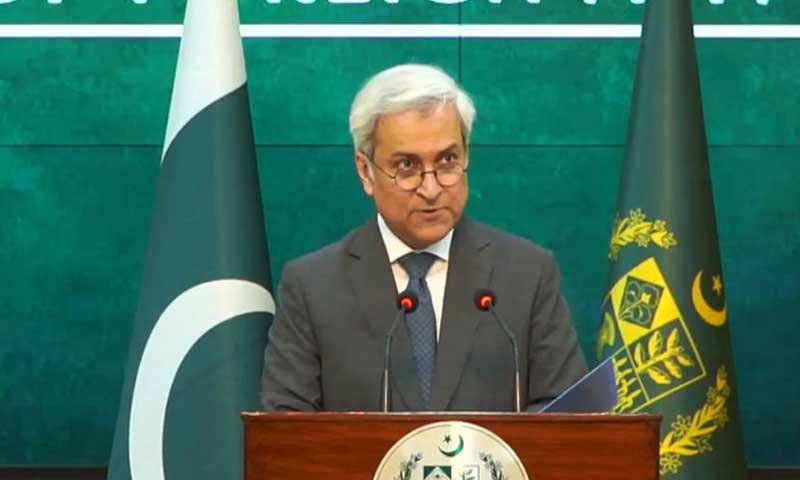
ISLAMABAD: Pakistan and India have completed their biannual exchange of nuclear facility and prisoner lists, continuing a longstanding practice under agreements signed decades ago.
Foreign Office spokesperson Tahir Hussain Andrabi confirmed during the weekly press briefing that Islamabad handed over its list of nuclear installations to the Indian High Commission, while India reciprocated by sharing details of its nuclear facilities with the Pakistani High Commission in New Delhi.
“This exchange is part of the Agreement on the Prohibition of Attacks against Nuclear Installations and Facilities, signed on December 31, 1988, which came into effect on January 27, 1991. Since 1992, both sides have shared nuclear facility lists annually on the first day of the year,” Andrabi explained.
In addition to nuclear sites, Pakistan and India also exchanged prisoner lists under the 2008 Agreement on Consular Access, which mandates sharing such lists on January 1 and July 1 each year. “The Indian government has provided the list of Pakistani prisoners in their custody, and Pakistan has shared its list with the Indian High Commission,” Andrabi added.
WATER CONCERNS AND TREATY COMPLIANCE
Responding to questions about India’s approval of the 260-megawatt Dulhasti Stage-II hydropower project on the Chenab River in India-administered Jammu and Kashmir, Andrabi said the move raised serious concerns under the 1960 Indus Waters Treaty (IWT).
“The IWT allows India a restricted use of western rivers for hydropower, but such projects require prior notification and strict adherence to design and operational norms. Pakistan has requested detailed technical information from India to determine whether this constitutes a new project, modification, or expansion of an existing plant,” he said.
Andrabi reiterated Pakistan’s stance, “While we remain committed to peaceful resolution of disputes, we will never compromise on our legitimate water rights. India must return to full treaty compliance.”
REGIONAL DIPLOMACY AND GLOBAL ISSUES
The spokesperson also highlighted Pakistan’s solidarity with Saudi Arabia over the situation in Yemen and reaffirmed support for Somalia’s sovereignty following Israel’s recognition of Somaliland. Andrabi also noted that Foreign Minister Ishaq Dar discussed bilateral relations with the Governor of Tabuk, the Foreign Minister of Uzbekistan, and the Somali Foreign Minister, and will soon participate in the Pak-China Strategic Dialogue.
On China and Taiwan, Andrabi reiterated Pakistan’s “consistent support for China in all core interests, including Taiwan,” urging countries to avoid actions that could heighten regional tensions.
ASSISTANCE TO PAKISTANIS IN AFGHANISTAN
Andrabi shared that more than 1,100 Pakistani nationals have contacted the embassy in Kabul after the closure of the border. “Fifteen students and 291 individuals have safely returned so far, and our mission remains in contact with Afghan authorities to facilitate the return of others,” he said.
The Foreign Office spokesperson also noted that Speaker of the National Assembly Ayaz Sadiq attended the funeral prayers of former Bangladesh Prime Minister Khaleda Zia, offering condolences to her family while engaging with the Bangladeshi National Security Advisor.
You May Also Like