- Web Desk
- Jan 08, 2026
Lack of RTI laws hinders investigative journalism in Gilgit-Baltistan
-

- Tanveer Abbas
- May 05, 2024
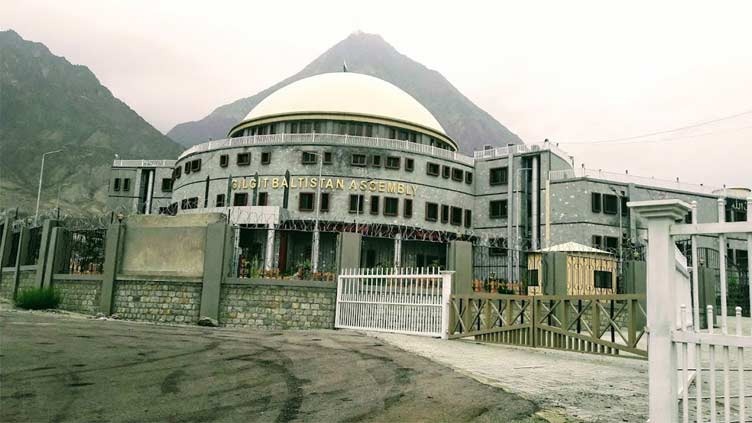
GILGIT: Despite the global celebration of World Press Freedom Day on Friday, journalists in Gilgit-Baltistan continue to grapple with significant challenges due to the absence of a Right to Information (RTI) law. The region remains the only part of Pakistan without this vital legislation, crucial for investigative journalism.
While the national and provincial assemblies have enacted laws granting citizens the right to request information from government offices, journalists in Gilgit-Baltistan lack the legal framework to obtain essential data for their reporting. In other provinces, complaints against non-compliance can be escalated to designated commissions, ensuring accountability.
Senior journalist Shabbir Mir emphasized the difficulties faced in the field without a comprehensive RTI law. “For instance, if we require information on a development project, we are often compelled to rely on unofficial sources,” he explained. “Ideally, data regarding the project’s cost, expenditures, escalated costs, and timeline should be accessible through proper channels.”
Mir highlighted that access to critical information is often obtained “through secret means,” due to the absence of transparency. “In my view, if Gilgit-Baltistan lacks investigative journalism, it is because we lack access to information,” he noted. He further argued that the RTI framework is essential for accountability and the survival of journalism in the region.
Journalist Shireen Kareem echoed Mir’s concerns, noting that the lack of an RTI law makes it difficult for investigative journalists, particularly those focusing on data-based stories, to access critical information. “Due to the absence of the Right to Information law in Gilgit-Baltistan, journalists do not receive responses from concerned departments,” she said. “These departments aren’t aware that data can and should be provided to journalists.”
Kareem pointed out that, unlike other parts of the country where information is available to the public via websites, even journalists in Gilgit-Baltistan struggle to access data. “RTI requires departments to provide necessary information to journalists, but its absence allows higher authorities to bar lower staff from sharing information,” she explained. “When we visit government offices seeking data, we are often told that the law does not permit it.”
As a result, Kareem noted that journalists in the region are often limited to covering political news alone. She underscored the urgency of either extending the federal RTI law to Gilgit-Baltistan or urging the regional assembly to enact and enforce its own version. “Without it, investigative journalism cannot flourish here,” she stressed.
The Gilgit-Baltistan Legislative Assembly, established under the “Gilgit-Baltistan Empowerment and Self-Governance Order” of 2009, initially held legislative authority over 63 subjects. Its powers were expanded through a new Presidential Order issued in 2018.
The regional government sought cooperation from Punjab to facilitate legislation, and in 2021, Punjab’s Chief Information Commissioner, Maqbool Qadir Shah, visited Gilgit-Baltistan to brief the authorities. However, despite the passage of more than two years since Shah’s visit, little progress has been made towards the introduction of an RTI law.
Read more: Naila Kiani becomes first Pakistani woman to scale fifth highest peak in world
Zuahib Akhtar, President of the Gilgit Union of Journalists, added that journalist unions had been largely dysfunctional for the last six to seven years, hindering progress on legislation regarding journalistic rights. “Since the inception of the new body in October last year, the union has been pressing the government to pass laws like RTI, the Journalist Protection Bill, and a Journalist Endowment Fund,” he said.
According to Akhtar, the RTI bill has been pending in the Assembly for many years, largely due to the lack of pressure from journalists when the unions were inactive. However, he is optimistic about recent developments. “A committee has been formed by the government to address journalists’ issues, and we are hopeful that progress will follow,” he noted.
When contacted, Special Assistant to the Chief Minister on Information Eman Shah noted that, to his knowledge, there has been no initial progress on the RTI Bill, nor is any such bill currently pending in the Assembly. He acknowledged that journalist bodies have been advocating for the Press Foundation Bill, which is currently pending. On this matter, he said that assembly members, including the Speaker and Chief Minister, have pledged their support.
“Journalists didn’t present their demands during Friday’s World Press Freedom Day ceremony,” Shah said. However, he recognized the RTI Bill’s importance, stating, “I urge Press Club and Union presidents to press us and build pressure so we can forward it to the Assembly.”
You May Also Like