- Web Desk
- Jan 08, 2026
Khawaja Asif blames commercial structures on waterways for flood devastation
-

- Web Desk
- Sep 01, 2025
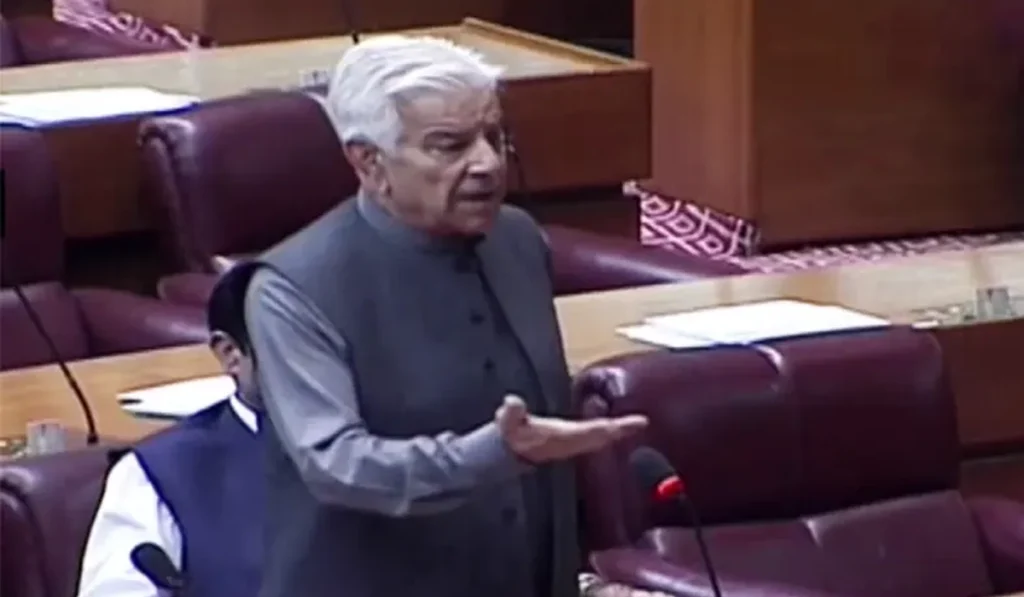
ISLAMABAD: Defence Minister Khawaja Asif has said that commercial construction on waterways and housing societies built on riverbeds were a major cause of devastation during the recent floods.
Speaking in the National Assembly chaired by Speaker Ayaz Sadiq, where a motion on the flood situation was tabled by Federal Minister Tariq Fazal Chaudhry, Asif said the disaster was not purely natural but the result of human actions. “We have built hotels on riverbanks,” he remarked.
He said that housing societies were being developed by narrowing river routes and even selling plots inside drains. “When you tamper with nature, it will respond,” he warned.
The minister said that every year floods hit Pakistan, causing billions of dollars in losses, yet instead of addressing the causes, “we turn to the world and the UN for aid without correcting our own actions.”
He noted that in places like Sialkot, riverbeds had been occupied, and because of such encroachments, floodwaters entered populated areas. “But how many operations have we carried out against encroachments in recent years?” he asked.
“Super flood” threatens Punjab for the next 24-48 hours, says Azma Bukhari
Referring to remarks by PTI lawmaker Ali Muhammad Khan, Asif agreed that major dams were built under dictatorships because they had the authority to push through projects, while democratic governments failed to achieve consensus.
“This is our misfortune — we politicise national issues and use them to advance our own interests,” he added.
The defence minister said the Mohmand and Diamer-Bhasha dams could take 15 years to complete. “I don’t oppose them — they should be built — but until then nothing will be left. Instead of waiting, we should construct dozens of small dams that can be completed in a year or two,” he suggested.
He stressed that attitudes must also change. “These are matters of national interest. We should at least reach consensus on public issues not tied to our power but to the people. When it comes to canals or dams, we shouldn’t block roads — but that is the politics we do.”
Asif said that water and climate were not political issues but national and international challenges, which required a unified response.
You May Also Like