- Aasiya Niaz
- Jan 09, 2026
Khaleda Zia’s death closes a long chapter in Bangladesh’s political wars
-

- Web Desk
- Dec 30, 2025
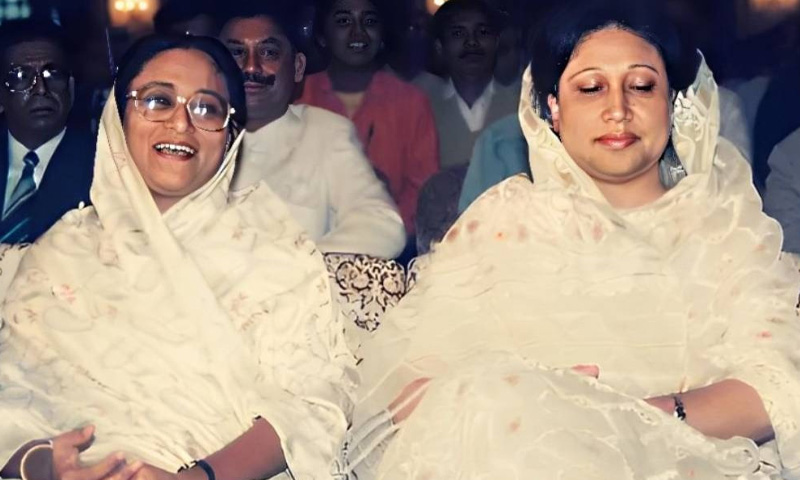
In the dramatic tale of Bangladesh’s political landscape, few rivalries have been as enduring and impactful as the one between Sheikh Hasina and Khaleda Zia. For over four decades, these two formidable women shaped the nation’s destiny, locked in a bitter struggle that transcended politics into personal vendetta, ultimately altering the very fabric of Bangladeshi democracy. Their story, defined by power, betrayal, and an enduring fight for control, continues to echo in the country’s political corridors, even as the curtain falls on Khaleda Zia’s life at a pivotal moment in Bangladesh’s transition.
THE BIRTH OF A RIVALRY: BLOODSHED, EXILE, AND THE SEEDS OF DIVISION
The rivalry between Hasina and Zia traces its origins to the blood-soaked politics of post-independence Bangladesh. Sheikh Hasina, the daughter of Sheikh Mujibur Rahman, the nation’s first president, experienced the brutal loss of her family when Mujib was assassinated in 1975. The ensuing chaos forced Hasina into years of exile, shaping her political trajectory in the shadow of tragedy.
Parallel to Hasina’s ordeal, Khaleda Zia rose to prominence in a similarly tragic context. Her husband, Ziaur Rahman, an army general, took power after Mujib’s death, steering Bangladesh away from its secular roots and pursuing an Islamized nationalism. Ziaur Rahman’s assassination in 1981 marked another turning point, pushing Khaleda into politics as the bearer of his legacy and the leader of the Bangladesh Nationalist Party (BNP).

THE 1980S: A RARE UNITY AMID POLITICAL STRIFE
In the 1980s, a strange alliance emerged between the two Begums. Military ruler Hussain Muhammad Ershad had seized power in a coup in 1982, ruling with martial law and tightly controlled elections. Hasina’s Awami League (AL) and Zia’s BNP led separate protest movements, paralysing Dhaka and other cities through strikes and civil disobedience.
By the end of the decade, both women realised that their common enemy, Ershad, could only be ousted through a united front. They joined forces, setting aside their animosity, and spearheaded the popular movement that culminated in Ershad’s resignation in December 1990. This moment of unity marked a significant milestone, ushering in a new era of democracy in Bangladesh and laying the groundwork for future electoral contests between the two political giants.

1990S AND 2000S: POLITICS AS PERSONAL VENDETTA
The fleeting unity of the 1980s quickly dissolved, giving way to an era of unrelenting rivalry. In the 1990s and 2000s, the battle between Zia and Hasina became a zero-sum game, with each leader using every available tool to undermine the other. The streets of Bangladesh became battlegrounds, filled with protest marches, boycotts, and clashes between rival supporters. Parliamentary deadlock and governmental paralysis became commonplace as the Begums clashed over every issue, from corruption charges to policy decisions.
In 2007, both leaders were arrested, detained, and charged with corruption. Hasina, released after a year of legal battles, returned to power, but Zia, whose BNP was relegated to opposition, would face her own long years of political struggle and imprisonment.
THE CARETAKER CRISIS: A BATTLEGROUND OF DEMOCRATIC NORMS
A defining flashpoint in the rivalry came in the late 2000s, centered around the caretaker government system, a neutral interim administration designed to oversee elections. Hasina and Zia became embroiled in a battle over this system. Zia fought for its continuation, while Hasina, after consolidating power, declared it unconstitutional. The dispute escalated into yet another crisis that saw the political elite retreat into emergency rule.
By 2011, Hasina’s government abolished the caretaker system, further polarising the political landscape. The 2014 and 2018 elections, boycotted by Zia’s BNP, were marred by allegations of rigging and repression, leaving Bangladesh’s democracy ever more fragile.
2010S: THE FALL OF ZIA AND THE RISE OF ONE-SIDED RULE
As the 2010s unfolded, the Battle of the Begums became increasingly one-sided. Sheikh Hasina, now Bangladesh’s longest-serving prime minister, presided over an era of economic growth and infrastructure development. Yet, her government came under intense scrutiny for centralizing power, curbing media freedom, and stifling opposition.
Meanwhile, Khaleda Zia’s political fortunes dwindled. Corruption convictions led to her imprisonment, and she was effectively removed from active politics. The BNP struggled without its leader, while Hasina’s AL tightened its grip on the state, leaving Zia’s legacy increasingly sidelined.
THE DRAMATIC UNRAVELING: ZIA’S RETURN AND A POLITICAL RESURRECTION
In 2024, the political landscape shifted again. After Hasina’s resignation, Khaleda Zia’s return to the political stage was swift and dramatic. Released from house arrest, her legal slate was cleared by the Supreme Court, and she was free to reassert her influence.
Zia’s comeback marked a symbolic return of the BNP to prominence, with her son Tarique Rahman also poised to re-enter politics. However, at 80, Khaleda Zia’s health began to decline, and on December 30, 2025, she passed away after a prolonged illness, leaving behind a political void that would alter the course of Bangladesh’s elections.
You May Also Like