- Web Desk
- Jan 07, 2026
Experts call for emergency alert cards to protect SMA patients from fatal mishandling
-

- Saba Bajeer Web Desk
- Oct 25, 2025
ISLAMABAD: Leading emergency medicine experts have called for the introduction of emergency alert cards for patients suffering from Spinal Muscular Atrophy (SMA), warning that even minor mismanagement in emergency care can prove fatal for these fragile patients.
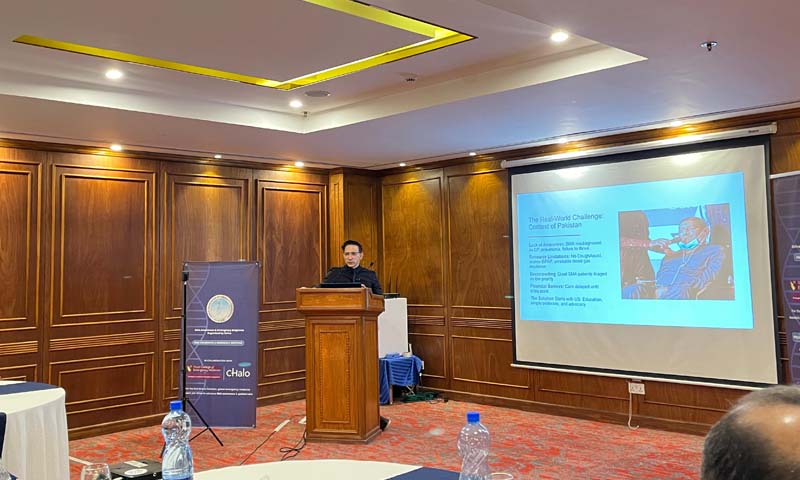
Dr Asim Ijaz, Consultant in Emergency Medicine (UK) and International Faculty Member for the Royal College of Emergency Medicine (RCEM), emphasized this need during a session on “Acute Assessment and Management of Patients with Spinal Muscular Atrophy (SMA)” held in Islamabad.
The session was organized by the Strive Eradication of Disability Foundation in collaboration with cHALO (Collaborative Hubs of Academic Learning in Emergency Medicine), a programme working to enhance emergency care standards across South Asia.
Dr Ijaz, who has been conducting trainings in Pakistan on emerging field of emergency medicine, noted that most emergency doctors are not trained or equipped to handle the delicate conditions of SMA patients. He recommended that alert cards—containing key “dos and don’ts” for emergency management—should be issued to all SMA patients to help doctors avoid life-threatening mistakes.
“Even small errors in treatment can lead to catastrophic outcomes. These alert cards can serve as life-saving tools for both patients and doctors,” Dr. Ijaz said.
He explained that SMA, a genetic disorder causing progressive muscle weakness, particularly affects respiratory muscles. The condition is often misdiagnosed as cerebral palsy or pneumonia, resulting in inappropriate treatment and preventable deaths.
Sharing a tragic case, Dr. Ijaz recalled how an eight-year-old SMA patient died within 20 minutes of arriving at an emergency department after being administered a sedative to calm her — a drug that triggered respiratory arrest.
“Around 80 percent of deaths among children with SMA are due to respiratory failure,” he said, advising doctors to avoid sedatives or respiratory depressants, including certain cough syrups.
“Such patients must be treated on a priority basis, and doctors should always listen to parents or caregivers — that’s the golden rule,” he added.
Dr. Maryam Tariq, Clinical Lead of the Emergency Department at Rawalpindi Medical College, highlighted the global and local burden of SMA. Globally, about 1 in 10,000 infants is affected by SMA, with 10,000 to 25,000 people currently living with the condition in the United States.
While no national data exists for Pakistan, Dr. Tariq said the prevalence is believed to be high due to consanguineous marriages. Citing research from Aga Khan University, she noted that SMA often goes undiagnosed in Pakistan.
Dr. Tariq further stressed the need for caregiver support and rehabilitation programs, pointing out that SMA is a debilitating, round-the-clock care condition that often leads to caregiver burnout.
“We must establish care-giving institutes to support families, provide respite, and treat caregivers with compassion,” she said.
Dr. Waseem Ur Rahman, Associate Consultant of Pediatric Neurology at Shifa International Hospital, Islamabad, shared encouraging developments in SMA treatment. He said that SMA Type 1 children, who previously could not survive beyond infancy, are now showing significant improvement — some even able to sit independently — due to the availability of new oral medications.
However, he noted that these treatments remain prohibitively expensive, though organizations like Strive Foundation are helping families secure doses for children in need.
You May Also Like