- Web Desk
- Today
Autistic Doll: Mattel introduces Barbie with slightly off-center eyes
-

- Web Desk
- Today
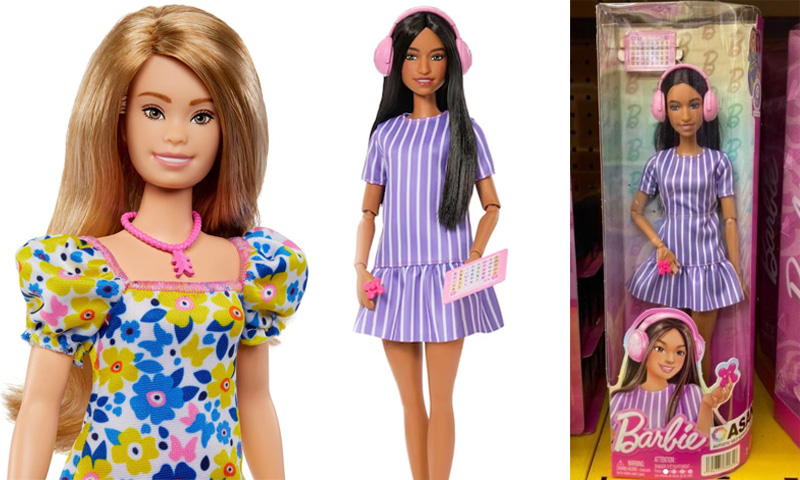
Mattel has launched a new Barbie doll designed to represent autism, as part of its ongoing campaign to make the iconic toy line more inclusive.
The new doll features characteristics intended to reflect traits often associated with autism, including eyes that look slightly off-centre, symbolising challenges with direct eye contact, and flexible elbows and wrists to allow children to mimic hand-flapping, a common form of self-expression among autistic people.
In addition to these physical features, the autistic Barbie comes with noise-cancelling headphones to reduce sensory overload, a fidget spinner as a tactile tool, and a tablet depicting a communication system for those who have difficulty speaking. Her clothing – a loose-fitting dress and flat shoes – is designed to minimise sensory discomfort.
This launch builds on Mattel’s previous efforts to broaden Barbie’s representation. Over the past few years, the company has introduced dolls with Down’s syndrome, Type 1 diabetes, visual impairments, and mobility challenges, reflecting both physical and neurological diversity.
The autistic Barbie was developed in consultation with the Autistic Self Advocacy Network in the United States and has received endorsements from UK-based autism charities. Peter Watt, managing director of the National Autistic Society, said the doll “helps foster understanding and acceptance of autism, particularly when these depictions are based on consultation with the autistic community.”
British autistic influencer Ellie Middleton, who contributed to the project, highlighted the importance of representation for girls: “Having an autistic Barbie makes me emotional. Young girls are often undiagnosed or misdiagnosed, so this doll offers a powerful symbol that neurodivergent children can feel accepted and seen.”
Mattel’s executive vice-president of Barbie and Dolls, Lisa McKnight, emphasized the brand’s commitment to social inclusion, saying Barbie has “an important role in a child’s early experiences” and can help challenge stigma through play.
The introduction of the autistic Barbie comes alongside the company’s broader diversity initiatives, which include dolls of different races, body types, and historical figures such as civil rights leader Ida B Wells and poet Maya Angelou.
Since 2016, Mattel has also responded to concerns about body image by adding “curvy” dolls, dolls with prosthetics, and other variations to ensure children can see themselves reflected in their toys. The autistic Barbie continues this trajectory, making neurodiversity visible within the global toy market.