- Aasiya Niaz
- 4 Hours ago
Are human-level robots arriving in 2026? Nvidia’s CEO thinks so
-

- Web Desk
- Yesterday
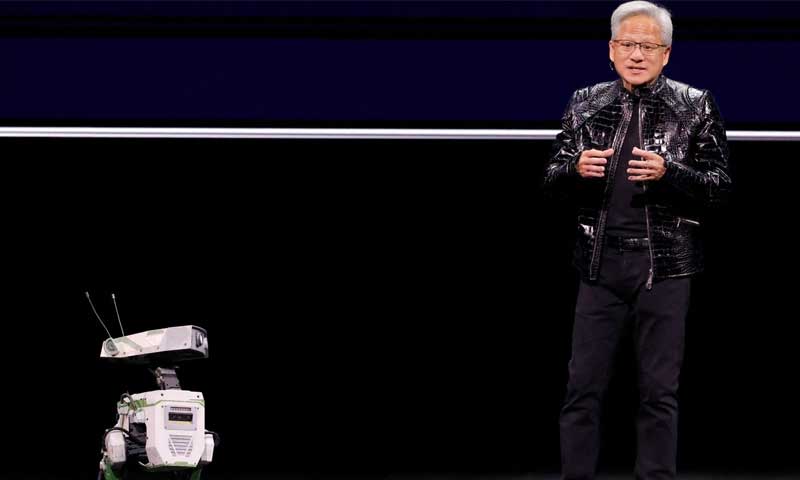
WEB DESK: In a declaration set to define the year’s tech ambitions, Nvidia CEO Jensen Huang has stated that 2026 will see the arrival of robots with human-level capabilities. When asked for a timeline, Huang replied simply, “This year,” citing the unprecedented speed of technological advancement. “You’re going to see some pretty amazing things,” he promised.
Huang’s forecast, coming from one of the most influential figures in global technology, reflects a widespread conviction in the industry. The belief is that artificial intelligence is poised for a great escape, from the confines of our screens into the tangible, physical world.
This shift was palpable at the Consumer Electronics Show (CES) in Las Vegas, where robots—from humanoids to automated lawnmowers, were ubiquitous. Yet the spectacle also revealed a gap between hype and reality. Many demonstrations required human controllers for complex tasks, reducing sophisticated machines to expensive remote-controlled toys.
The genuine excitement, however, is not without foundation. Experts point to self-driving cars as a powerful proof-of-concept. If AI can navigate the unpredictable chaos of public roads, the thinking goes, it can likely handle other complex physical environments.

The crucial breakthrough, according to Nvidia executives, is the development of an AI “brain” for robots. “We finally have the core ingredient to build the missing piece,” said Rev Lebaredian, Nvidia’s vice president of Omniverse. “Once we could do that, it started making sense to build the robot bodies, because we have the brain to put inside them.”
While the futuristic vision of a robotic domestic assistant remains a few years off, the immediate frontier is industry. Factories offer controlled environments with clear objectives, making them ideal testing grounds. Robert Playter, CEO of Boston Dynamics, predicts widespread deployment in industrial settings by 2028-2030, with more affordable home models likely following five years later.
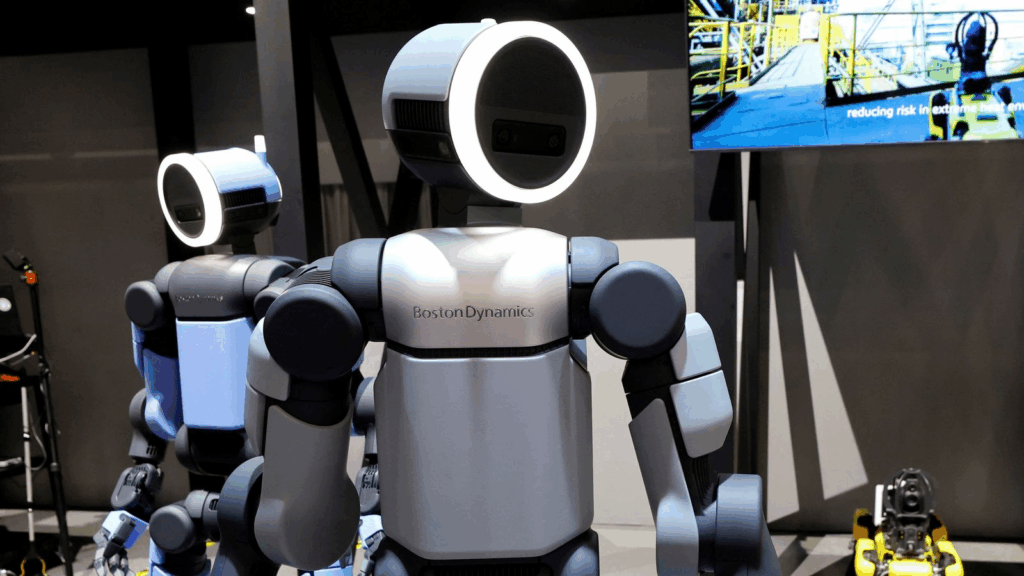
This transition inevitably raises concerns over job displacement, but tech leaders offer a counter-narrative. Huang argues that robots will address a critical global labor shortage, calling them “AI immigrants” to fill essential roles. Playter echoes this, noting that in practice, robots often take over dangerous or undesirable tasks, allowing human workers to transition to safer, higher-skilled jobs like robot operation.
The industry consensus is clear: the core technological barriers are falling. As these machines evolve from trade show novelties into functional coworkers, 2026 may be remembered as the year they truly stepped into our world.
You May Also Like