- Web Desk
- Jan 09, 2026
Surge in banks’ investment in government papers hits Rs26 trillion
-

- Web Desk Karachi
- Feb 10, 2025
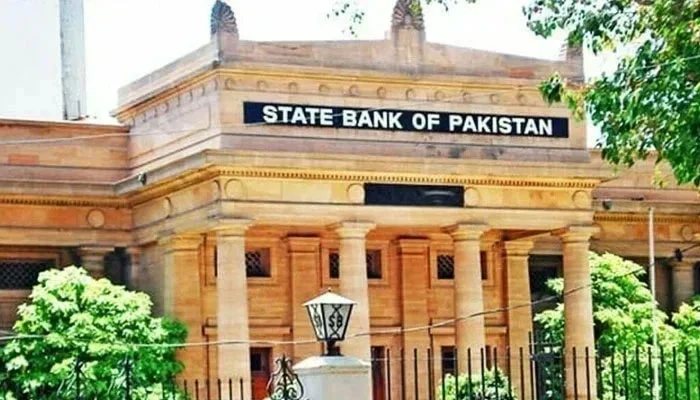
KARACHI: By December 2024, banks’ investments in government securities soared to Rs26 trillion, accounting for 57.6 percent of the central government’s domestic debt. Recent data from the State Bank of Pakistan (SBP) highlights the significant role banks play in financing the government, alongside the substantial profits they generate using taxpayers’ money.
While borrowing from banks is common practice for the government, the scale of such borrowing has increased notably, indicating a trend toward rising domestic debt. The data revealed that banks are reaping record profits, benefiting from high-interest rates around 22 percent throughout FY24, with returns on Treasury bills sometimes exceeding the policy rate.
This considerable investment in government securities has constrained banks’ ability to lend to the private sector. Nevertheless, in the second quarter of the current fiscal year, banks increased lending in order to comply with the advance-to-deposit ratio (ADR) limit and avoid a 15 percent incremental tax imposed by the federal government. As a result, lending to the private sector reached approximately Rs1.3 trillion but has started to decline.
To adhere to the ADR requirements and prevent tax penalties, banks provided short-term loans of Rs1.3 trillion to non-banking financial institutions (NBFIs).
The data indicates that banks primarily invested in longer-term Pakistan Investment Bonds (PIBs), with total PIB investments reaching Rs26 trillion by December 2024. Scheduled banks held Rs19.4 trillion of this amount, while non-banking entities, including insurance companies and corporates, accounted for Rs6.332 trillion.
Also read: Pakistan targets Rs 5.2 trillion in treasury bill and bond sales amid growing foreign outflows
Islamic bonds, or sukuk, also attracted significant investment, totalling Rs5.757 trillion, with banks investing Rs3.2 trillion and non-banks contributing Rs2.555 trillion.
Market treasury bills (MTBs) drew in lower investment than PIBs, totalling approximately Rs9.961 trillion; banks contributed Rs5.332 trillion while others accounted for Rs4.622 trillion.
In total, investment from banks and non-banks reached Rs41.5 trillion, with scheduled banks investing Rs28 trillion in PIBs, MTBs, and sukuk, while non-banks contributed Rs13.5 trillion.
Experts argue that the current banking landscape in Pakistan fails to stimulate economic growth. Instead, banks are profiting by investing in government securities, effectively enabling the government to manage its debt using taxpayer funds. The government has a tendency to introduce new taxes for increased revenue without tightening its spending.
Financial analysts foresee that the fiscal deficit may exceed projections outlined in the budget. The Federal Board of Revenue (FBR) is already falling short of its target by Rs388 billion. For the fiscal year 2024-25, the government has forecasted an overall fiscal deficit of 6.9 percent of GDP, adjusted from a revised 7.4 percent for 2023-24. The projected federal budget deficit is set at Rs8,500 billion for 2024-25, an increase from the Rs7,506 billion originally budgeted for 2023-24, which was subsequently revised upward to Rs8,388 billion.
You May Also Like