- Web Desk
- Yesterday
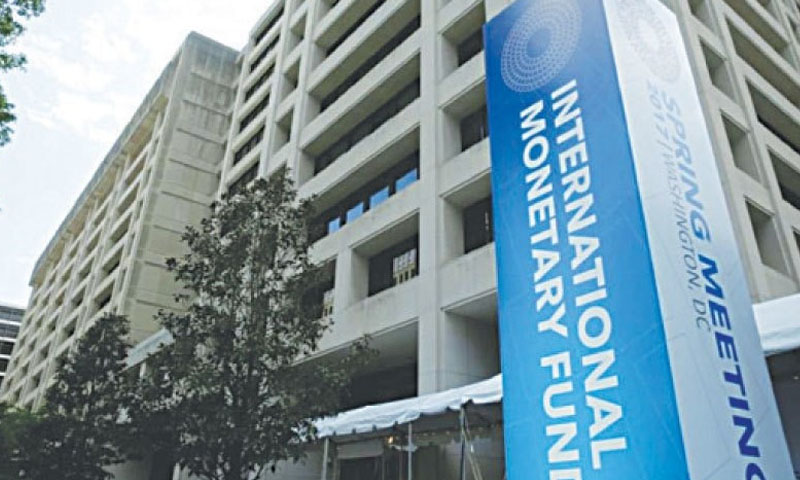
IMF, Pakistan reach staff-level deal on second EFF review and first RSF review
-

- Web Desk
- Oct 15, 2025

ISLAMABAD: The International Monetary Fund (IMF) and Pakistan have reached a staff-level agreement on the second review under the 37-month Extended Fund Facility (EFF) and the first review under the 28-month Resilience and Sustainability Facility (RSF).
Once approved by the IMF Executive Board, the agreement will unlock about $1 billion under the EFF and another $200 million under the RSF, taking total disbursements under both programmes to roughly $3.3 billion, the Fund said in a statement on Wednesday.
Recovery gains momentum amid challenges
The IMF team, led by Iva Petrova, held meetings with Pakistani authorities from September 24 to October 8 in Karachi, Islamabad, and Washington DC. The Washington-based lender noted that Pakistan’s reform programme, supported by the EFF, is helping restore macroeconomic stability and rebuild investor confidence.
The IMF said Pakistan’s recovery remains on track, with the current account posting its first surplus in 14 years during FY25. It added that inflation is contained, fiscal performance has surpassed programme targets, and the country’s financial conditions have improved as sovereign spreads narrowed significantly.
However, the Fund warned that recent floods have severely affected the country’s outlook. The disaster, which killed over 1,000 people and displaced nearly 7 million, damaged homes, infrastructure, and farmland, pulling down the projected FY26 GDP growth to between 3.25 and 3.5 percent. The IMF said the floods once again highlight Pakistan’s exposure to climate-related risks and the urgent need to build resilience.
Commitment to reforms and fiscal discipline
According to the IMF, Pakistani authorities reaffirmed their commitment to maintaining prudent policies and pursuing ongoing structural reforms under both the EFF and RSF. Islamabad aims to achieve a FY26 primary budget surplus of 1.6 percent of GDP by strengthening tax collection and compliance. Authorities have also begun reallocating federal and provincial funds to provide emergency relief to flood-hit areas.
Social protection remains a key focus area, with plans to expand the Benazir Income Support Programme (BISP) and boost spending on health and education. The government also intends to improve revenue-sharing between federal and provincial administrations and strengthen public financial management systems.
Energy, monetary and structural reforms
The IMF said the State Bank of Pakistan (SBP) remains committed to keeping inflation within its 5–7 percent target range and is prepared to adjust its stance if price pressures rise. Efforts are also underway to deepen the foreign exchange market to improve transparency and resilience.
On the energy front, the government has pledged to prevent the buildup of circular debt through timely tariff adjustments and continued reforms in power distribution and generation. Structural changes to improve governance, productivity, and the business environment are also being advanced, alongside steps to promote private sector growth and reduce state involvement in commercial sectors.
The IMF added that the RSF-supported policies are helping Pakistan move towards greener development. Reforms promoting electric mobility, climate risk management, and disaster financing frameworks are already in progress.
The Fund expressed sympathy for those affected by the floods and appreciated Pakistan’s cooperation during the discussions.
Shehbaz hails IMF deal as sign of improving macroeconomic indicators
Prime Minister Shehbaz Sharif on Wednesday expressed satisfaction over the staff-level agreement (SLA) reached between Pakistan and the International Monetary Fund (IMF), calling it a sign of growing confidence in the country’s improving economy.
According to a statement from the Prime Minister’s Office (PMO), the agreement, finalised under the Extended Fund Facility (EFF) and the Resilience and Sustainability Facility (RSF), will provide funding worth $1.2 billion. PM Shehbaz said the development reflects progress in Pakistan’s macroeconomic indicators and shows the IMF’s confidence in the country’s rapidly improving economic situation.
You May Also Like