- Web Desk
- Jan 09, 2026
Europe offers zero tariff deal to US as trade tensions escalate
-

- Web Desk Karachi
- Apr 08, 2025
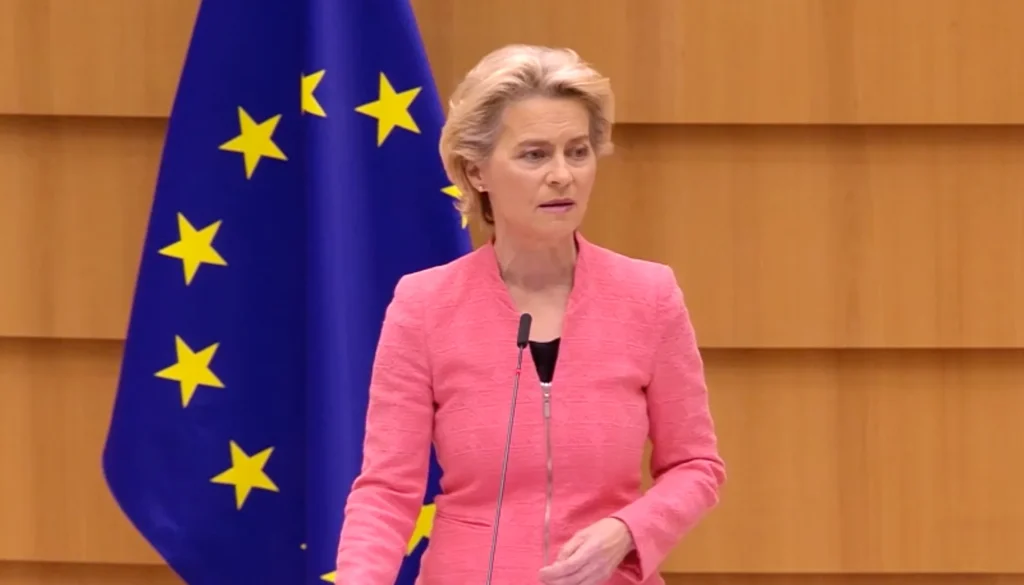
BRUSSELS, BELGIUM: “Europe is always open to a favorable deal,” stated Ursula von der Leyen as trade tensions with the United States reach unprecedented levels. The European Commission has proposed a deal to the US aimed at eliminating tariffs on all industrial goods amid ongoing trade negotiations. Von der Leyen emphasised her readiness to retaliate against Donald Trump’s policies if discussions do not yield results.
Trump previously announced a 20 percent tariff on a wide range of imports from the European Union, scheduled to take effect on April 9. Steel, aluminum, and automobiles will face a separate 25 percent tariff, impacting over €380 billion worth of EU goods. However, certain products, including pharmaceuticals, copper, lumber, semiconductors, and energy, are exempt.
“We are prepared to engage in negotiations with the US. We have offered zero-for-zero tariffs for industrial goods, as we have successfully done with several other trading partners,” von der Leyen remarked on Monday. “Europe is always keen on securing a beneficial agreement. Therefore, we keep this offer on the table while also being ready to respond with countermeasures to defend our interests.”
Von der Leyen indicated that the “zero-for-zero” proposal had been presented multiple times in the past for the automotive sector but received no satisfactory response from Washington. As discussions escalated, the Commission extended this offer to all industrial products, which was submitted ahead of Trump’s April 2 announcement.
EU seeks unity in first strike back at Trump tariffs
“We prefer a negotiated resolution,” von der Leyen stated, cautioning that her team would utilize “all available tools,” including an anti-coercion instrument introduced in 2023 but never utilised, if necessary.
She characterized Trump’s sweeping tariffs as a significant shift for the United States that would incur “immense costs” for American consumers and businesses, as well as impose a “massive” strain on the global economy. While Washington frames the tariffs as “reciprocal,” Brussels has rejected this rationale as “neither credible nor justified.”
Beyond the immediate fallout on EU-US trade, which risks billions in potential losses, the Commission is concerned about the broader implications of Trump’s decision on international trade, particularly concerning Asia. Asian countries face even higher tariffs than the EU, including rates of 24 percent for Malaysia, 26 percent for India, 32 percent for Indonesia, and up to 49 percent for Cambodia. China faces a total of 54 percent tariffs due to additional burdens imposed, and it has retaliated in response.
Brussels worries that these high tariffs could bar Asian nations, whose economies rely heavily on exports, from accessing the US market, leading them to redirect their products to Europe instead. China poses a particular risk, given its ongoing scrutiny for supplying the West with low-cost, heavily subsidized goods.
During her address, von der Leyen announced the establishment of a new “task force” dedicated to monitoring shifts in global trade dynamics. “We will also guard against indirect effects due to trade diversion. To this end, we will create an ‘Import Surveillance Task Force’,” she explained. “We will analyse our historical import data for any unexpected surges in specific products or sectors that may require our intervention.”
You May Also Like